

Samsung Galaxy S10+ camera test vs iPhone XS, Pixel 3, and Nokia 9 - ferreiradefe1977
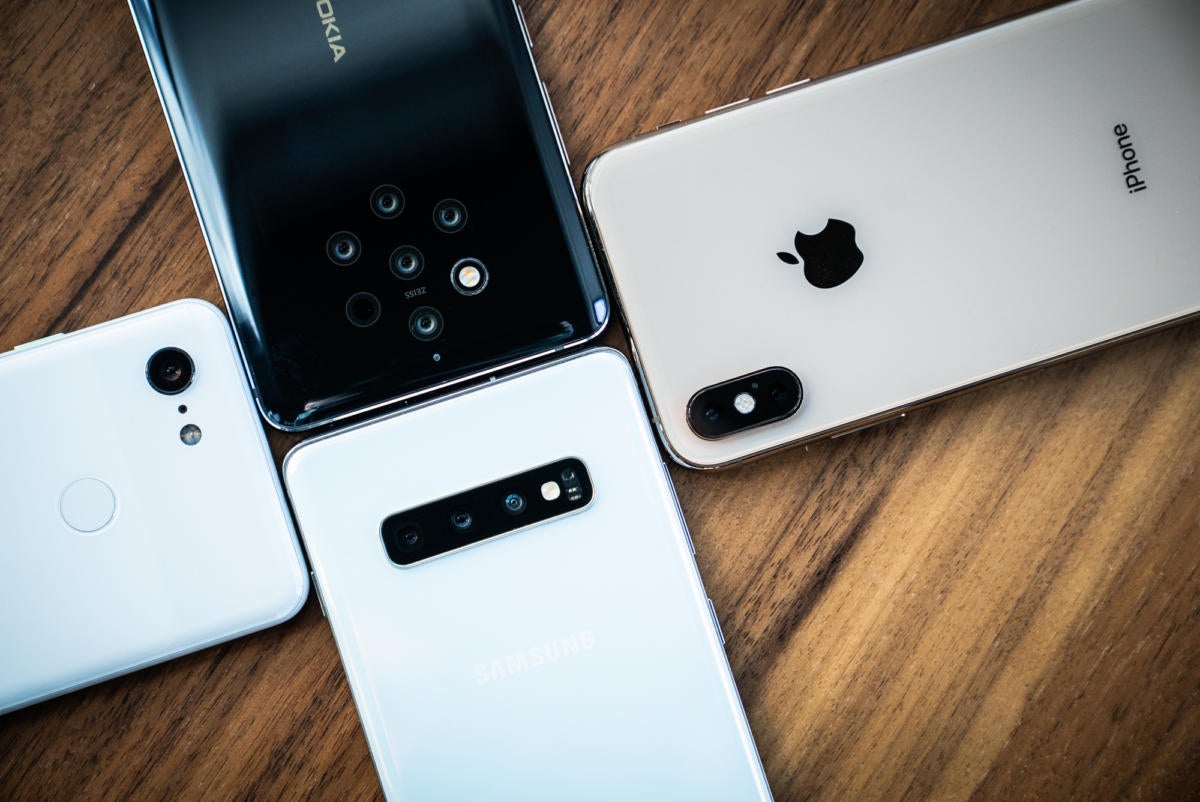
In the previous episode of Last Cam Standing we saw the iPhone XS' camera win its second straight victory over Huawei, Xiaomi, and Sony. In this matchup, Samsung steps into the ring with its S10+, Nokia pushes boundaries with the Nokia 9 Pureview, and Google's Picture element 3 is back for a rematch. Let's start this epic pic fight!
 Cristal Patrick George Gilbert Aime Murphy/IDG
 Last Cam Erect is PCWorld's video series that determines the best speech sound camera for hush images in a King-of-the-hill dash battle. Whichever phone wins moves on to face the succeeding contender—so take PCWorld's YouTube for future shootouts!
The competition
Early heavenward, rent out's meet the competitors. Apple's iPhone XS has held the top blemish for two rounds now, thanks to its computational photography chops. But at once it's up against some stiff competition, so we'll see if it can continue top.
The first challenger is Samsung and its Galaxy S10+. Information technology features a trio-photographic camera system, with the main lens maintaining that 'duple aperture' gimmick. Samsung has never done well in Last Cam Standing thanks to aggressive processing, sol we trust it's toned back some.
Next in line for the title is Nokia. The Nokia 9 Pureview and its five camera lenses could be a game modifier for smartphone photography. Nokia has partnered with Zeiss and Light to push the boundaries of what's possible, so Lashkar-e-Tayyiba's experience if it works out well in our examination.
Last only non least is Google. The Pixel 3 lost to the iPhone XS a couple of rounds ago, but since and so information technology's gotten patched up and upgraded, sol IT's look for a rematch!
As always, I'll comprise focus primarily on the basic tv camera of apiece phone, using them in auto way as they were configured dead of the box. This allows for consistent testing and shows just how all company puts its possess tan on camera processing.
The tests will be incomplete into four categories: Colorize, Clarity, Exposure, and Extra Features. Extra features is where I dive into supplementary tests for things the likes of portrait mode, extra lenses, and low sparkle modes. We hired the fabulous Natalie to model for us—be sure to check out her Instagram page.
Category 1: Color
But enough with the build-up, we've got a fate of test results to get through! First up is colourise: We'll be superficial at things like color replica and Patrick Victor Martindale White balance accuracy.
 Adam Patrick George Gilbert Aime Murphy/IDG
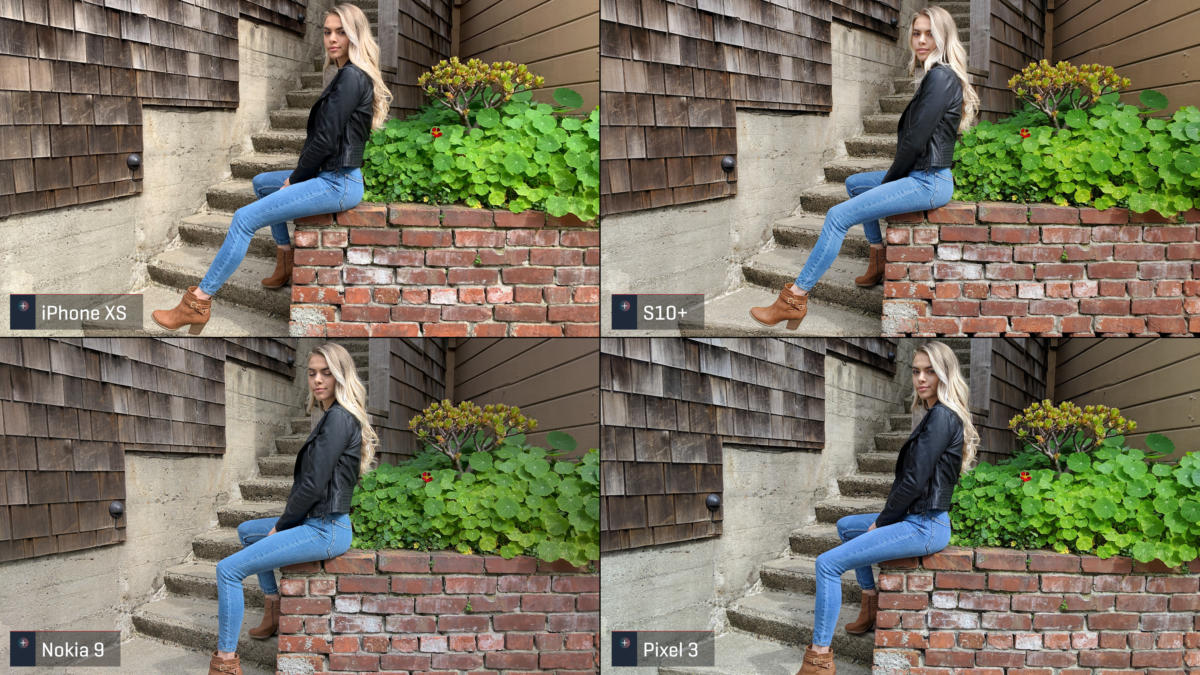
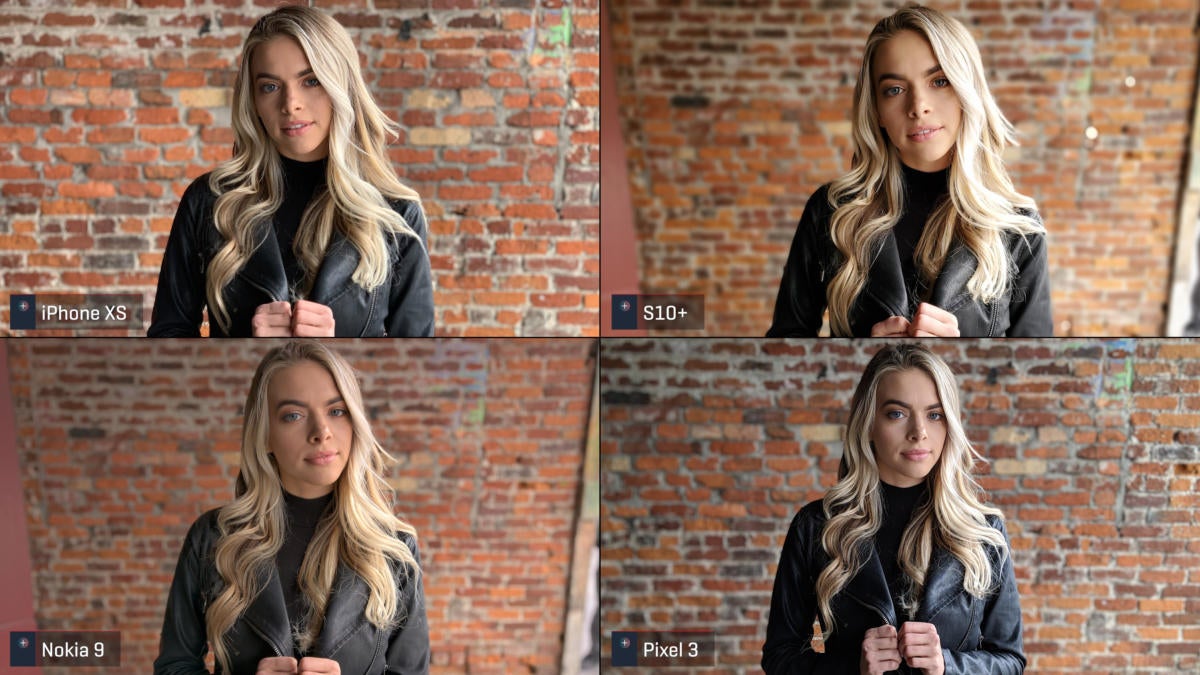
 Starting with this first shot of Natalie chilling on the bricks, let's bank note the differences in colorize temperature – illustrated mainly by the practical. The iPhone is the warmest, followed aside the Nokia. The Pixel is the coolest, and the S10+ is somewhere in betwixt. The concrete in the S10+'s photo is cool, but the railroad siding of the house is the warmest of the bunch. I'm going to give the Nokia the edge here, as it offers a great balance.
 Adam Patrick Sir James Murray/IDG
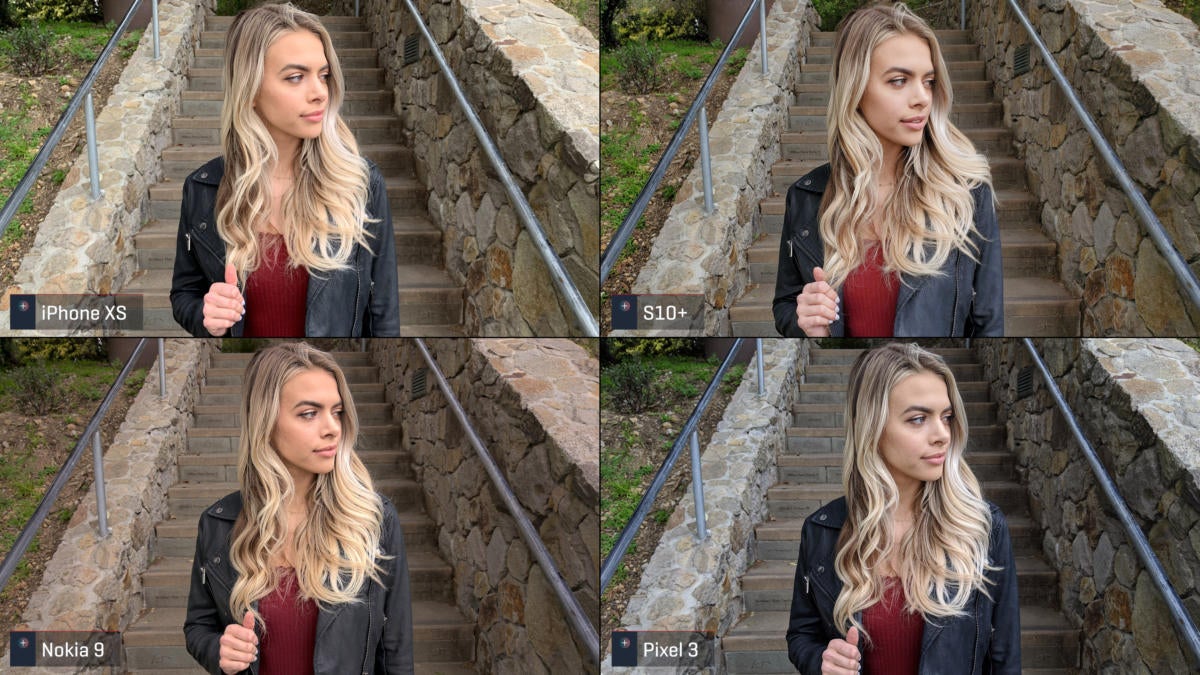
 Switch to this next guesswork, Nokia ramps up the ardent tones way too far for my tastes. The iPhone has the most saturated red shirt, likewise as a reddish hue on her skin, which is typical for Apple. And course the Pixel is the coolest, but is pretty eager overall. I think the S10+ did the best here thanks to punchy, warm colours that preceptor't finger overexaggerated.
 Adam Patrick Murray/IDG
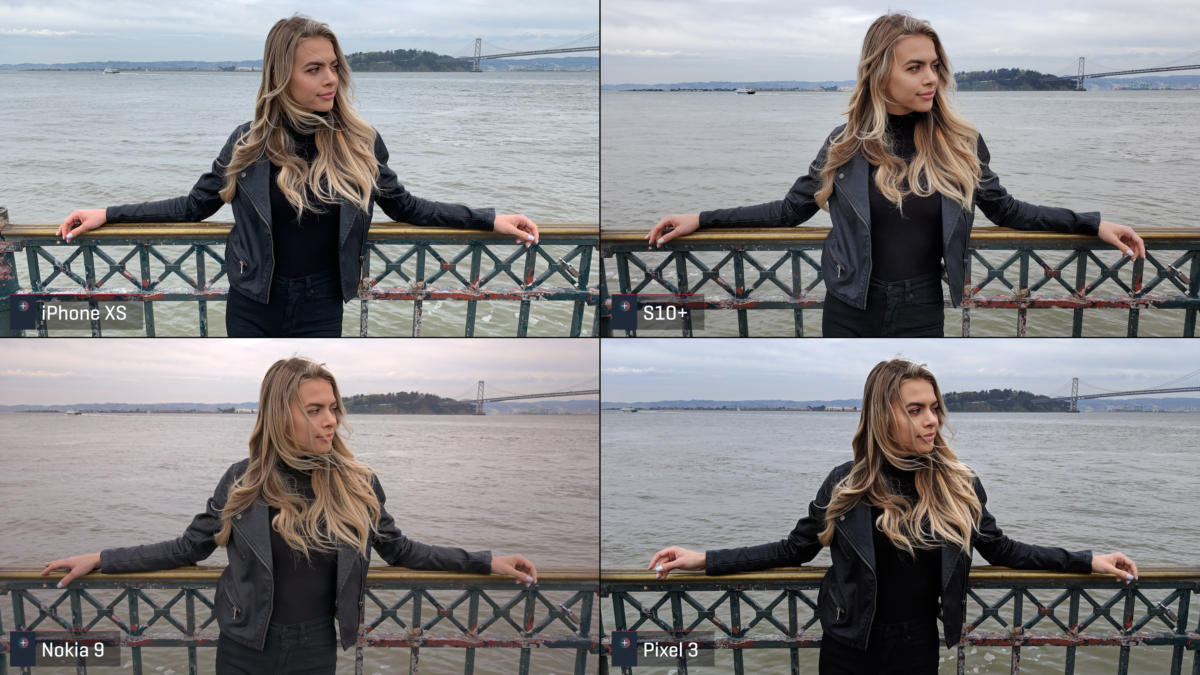
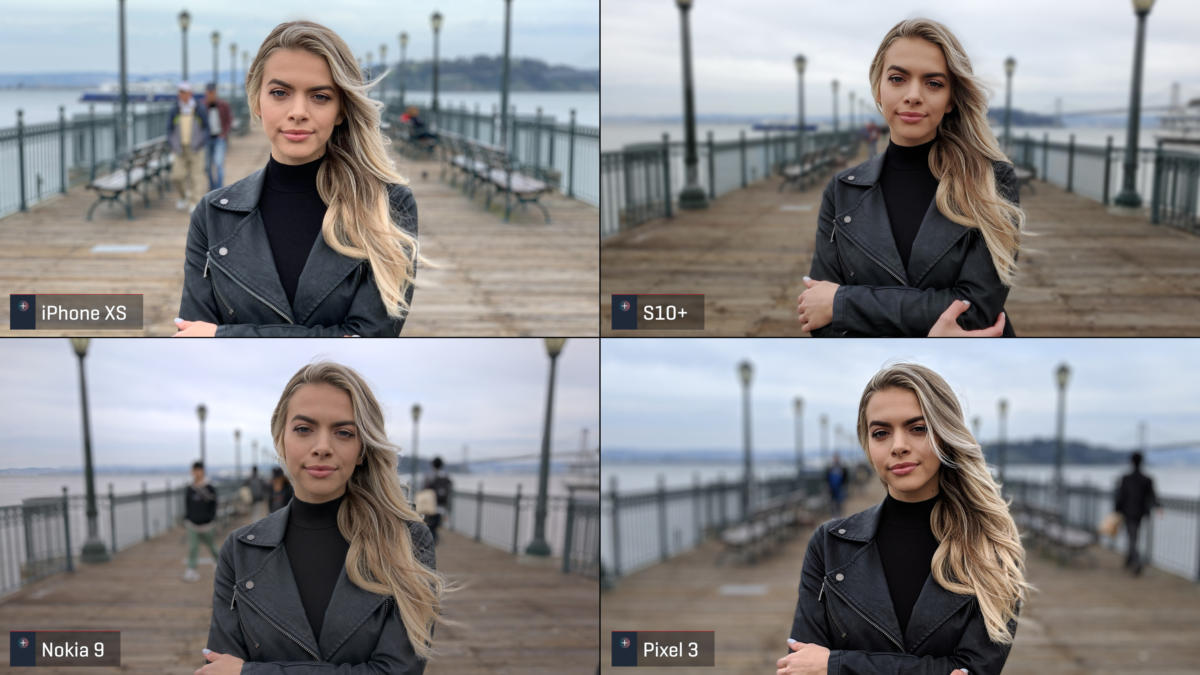
 I feel the same about this shot crosswise the Bay. The S10+'s photos just haven't been as sodden as those from past Samsung phones, and that's a good thing. But the Nokia waterfall flat on it's nerve yet once again, and makes a really odd choice in white balance—I'm non sure what to think.
 Adam Patrick Murray/IDG
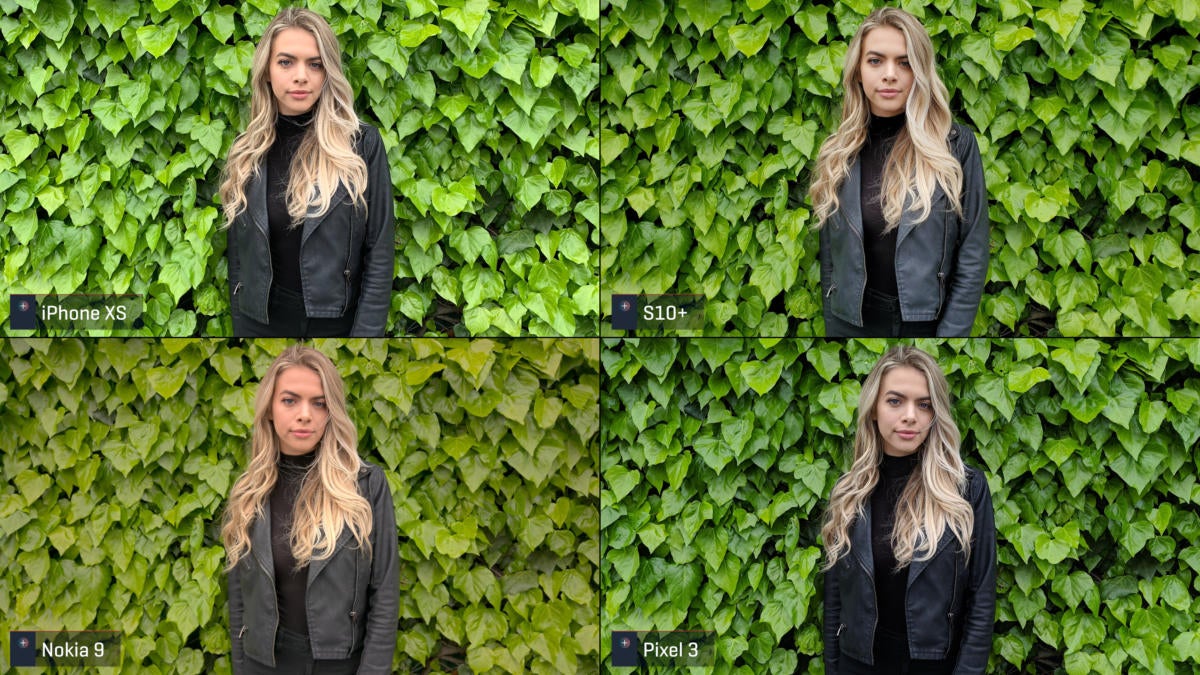
 Against this wall of vines, the Nokia struggles yet once more, application the entire photo in an orangeish imbue that International Relations and Security Network't ingratiating. The rest period of the phones look fine, but I'd give the slight edge again to the Pixel.
 Adam Patrick Murray/IDG
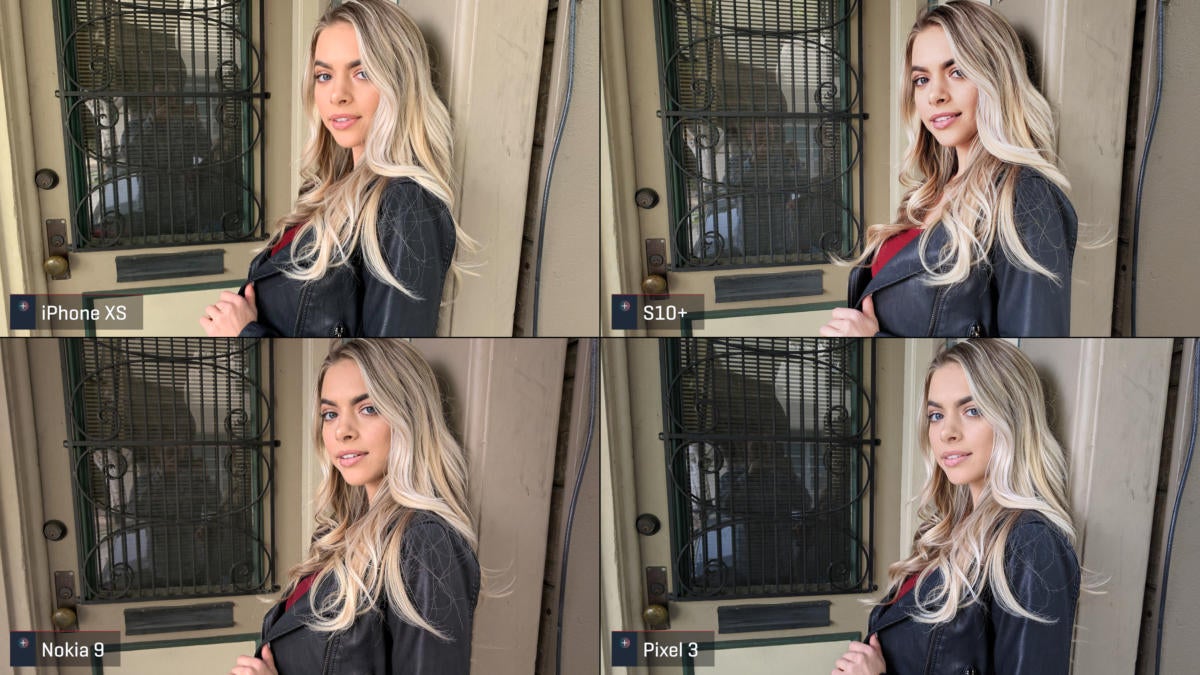
 Strangely enough, Nokia did the best in this situation, thanks to the prevalance of chromatic tones in most of the scene. It's non accurate but it is rewarding, liberal Natalie's skin a nice warm glow that's missing in the S10+ and Pixel's photos. Her skin tone is far too red in the iPhone's guessing, a horrible timbre Apple just can't shake.
 Hug dru Patrick Murray/IDG
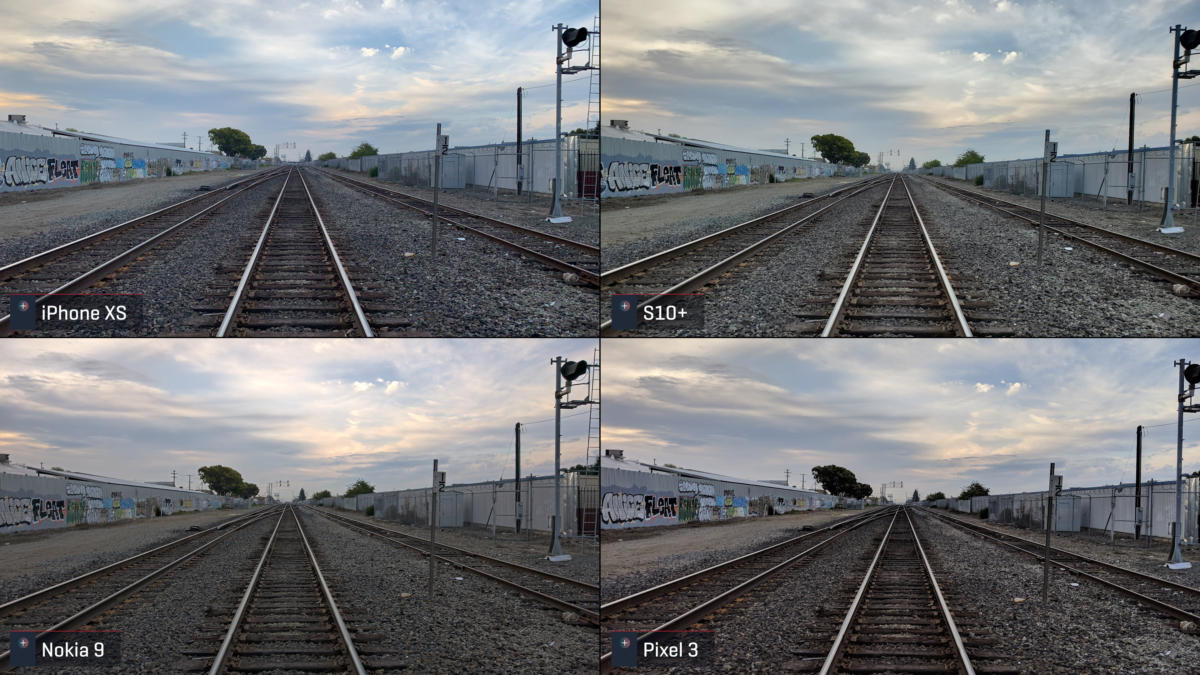
 Whole, Nokia has flashes of briliance when it comes to color, but IT's conflicting and unpredictable. The iPhone leans too emotional too often, and I've ne'er liked the means information technology handles skin tones. The Pel won this family last time and continues to instill with cryptical colors and pleasing tones—even when it's the coolest of the bunch.
 XTC Patrick Murray/IDG
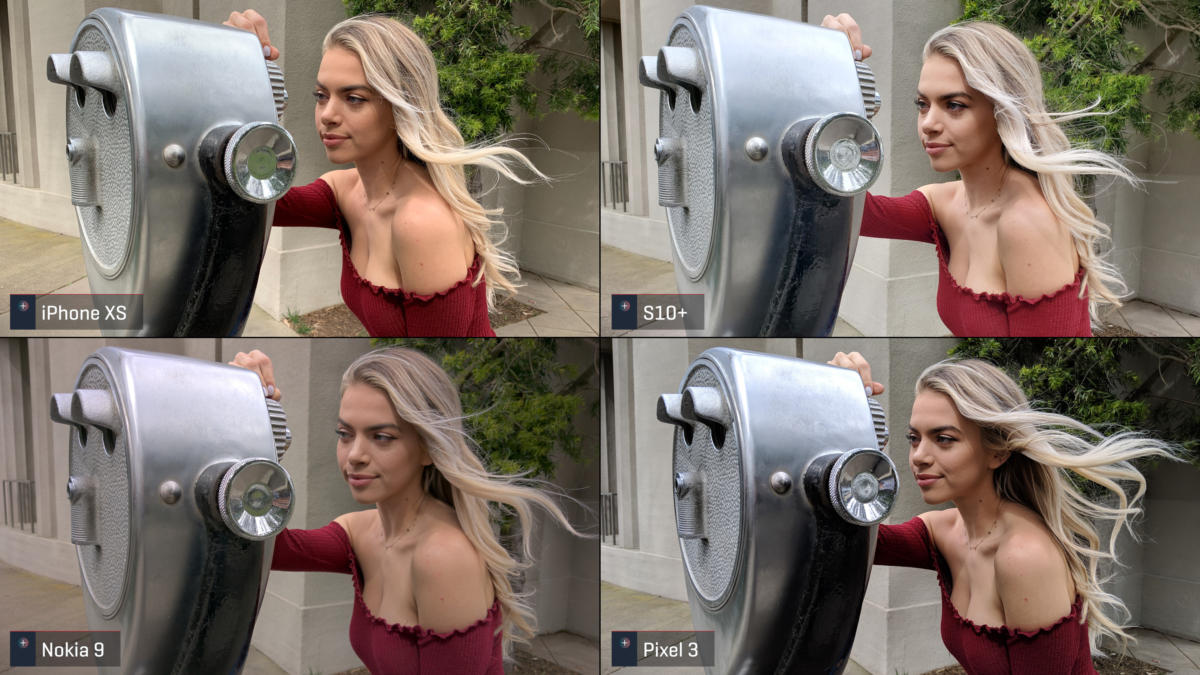
 But I was surprised away just how muted the S10 was compared to sr. Samsung phones, performing great in almost every situation. I'm loss to have to forebode the colouring material category a tie between the Google Pixel 3 and the Samsung Galaxy S10+.
Class 2: Clarity
The next category is clarity. Here we'll be looking at things like the sharpness of for each one camera, you bet well they stay sharp in insufficient lighting situations.
 XTC Patrick Sir James Augustus Henry Murra/IDG
  XTC Patrick Murray/IDG Robert Adam Patrick Murray/IDG
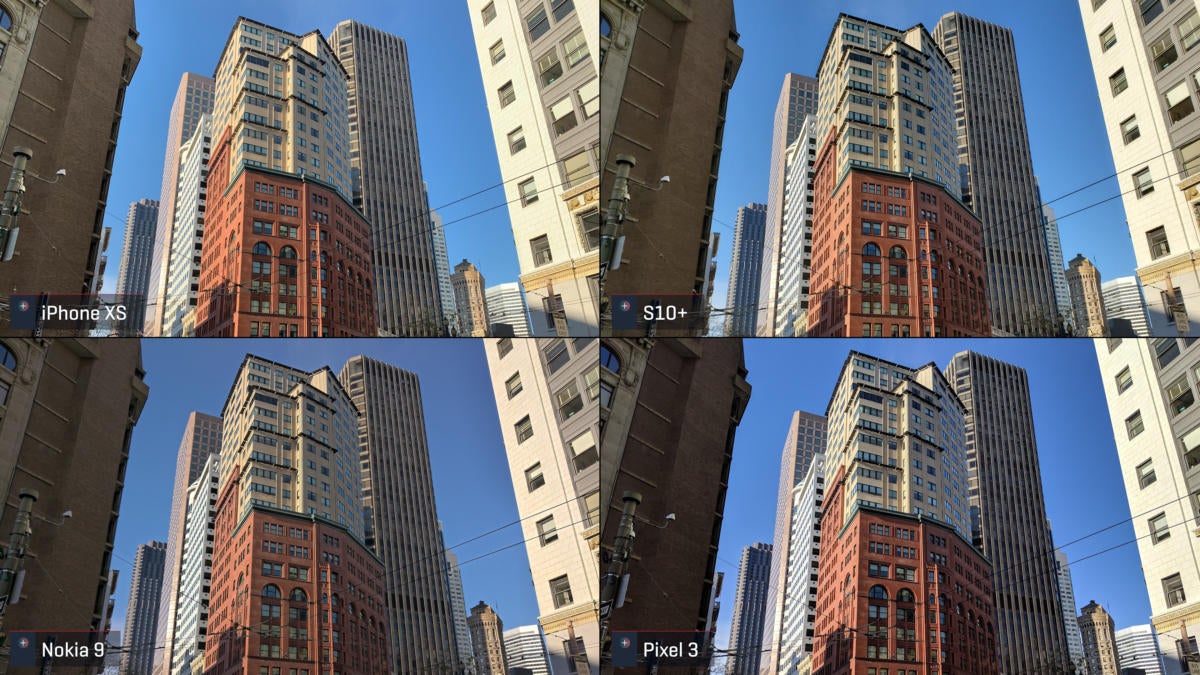
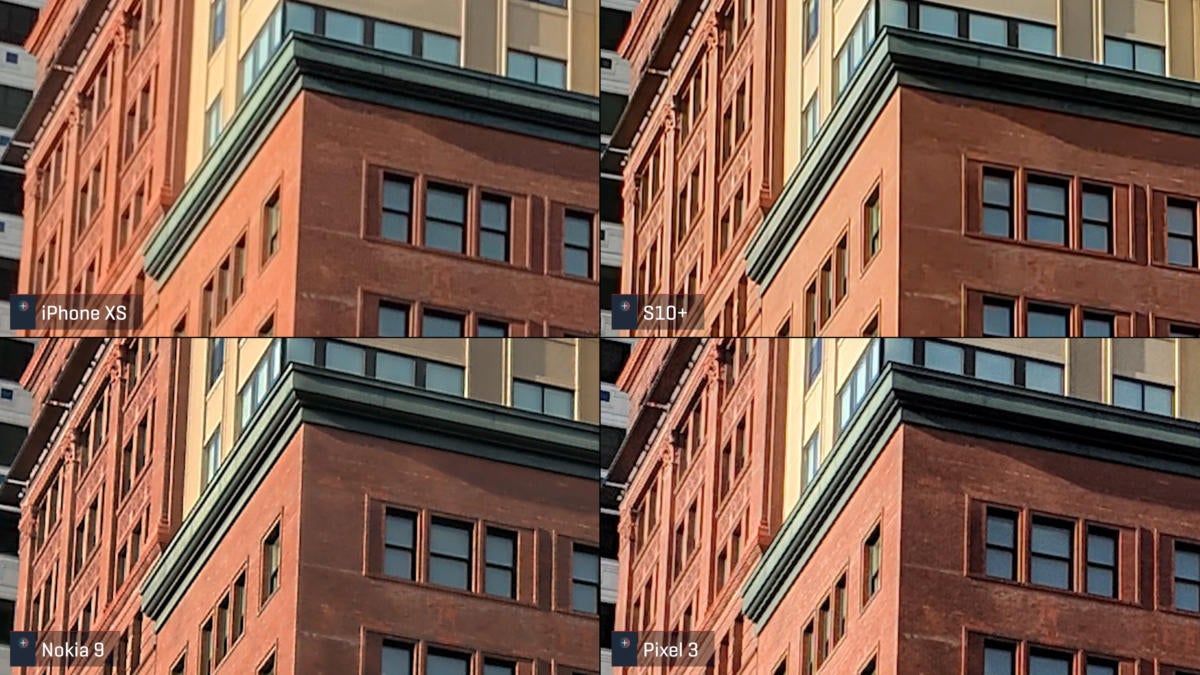
 Opening with some scenes that don't include any people, permit's surg in on this building and center on the bricks. Right off the bat we can find Samsung's signature noise step-dow in play, taking away detail and smoothing textures. Nokia's shot is sack up enough but features some jagged edges and doesn't really impress. The Picture element has the most definition in the bricks, but it's extremely sharpened, which produces artifacts. The iPhone isn't too far behind on this one, pull in a solid performance.
 X Patrick Murray/IDG
  Adam Patrick Sir James Augustus Henry Murra/IDG
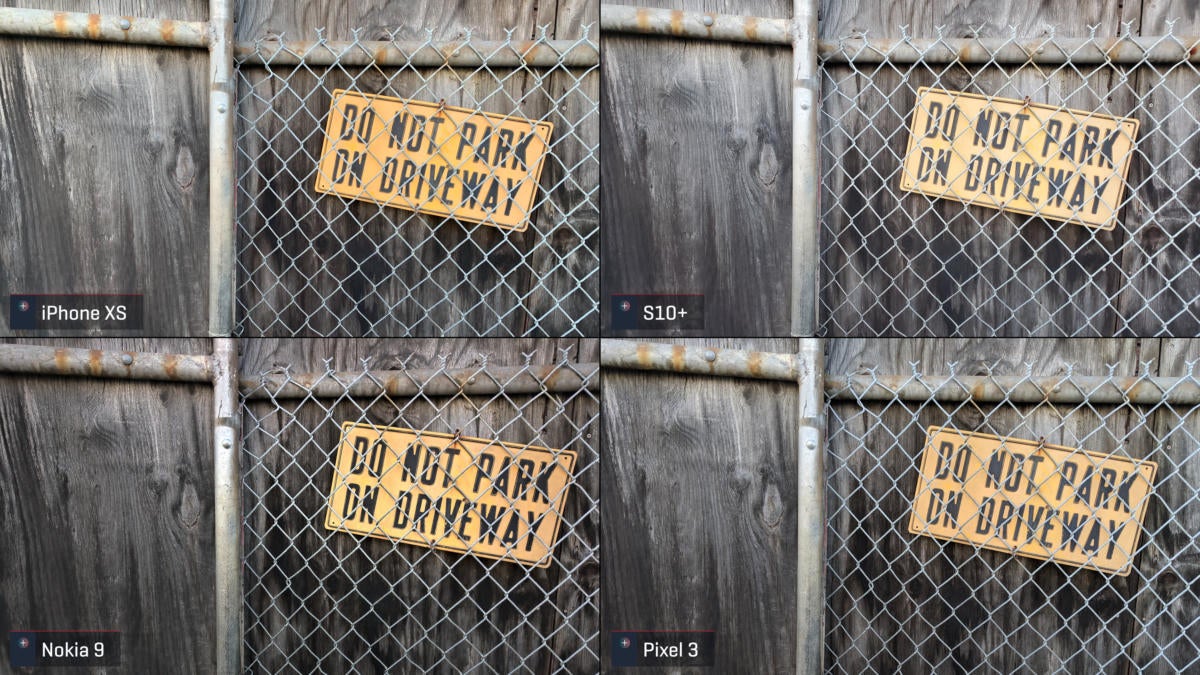
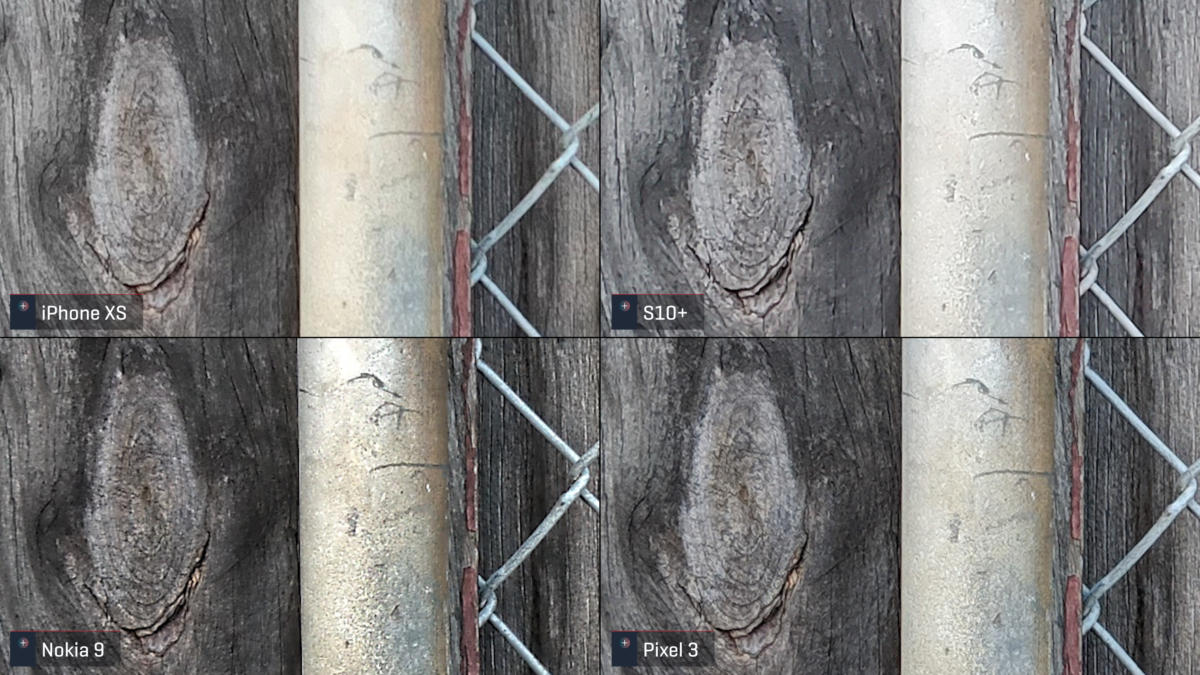
 At this closer distance we realize a striking amount of detail on the terminal and in the Wood grain in Nokia's pic. I'm impressed by antitrust how sharp this pic clothed without superficial oversharpened. The Pixel is the single phone that comes or so that large-hearted of clarity, but IT's hampered by the sharpening style that produces this swirling pattern.
That S10+ photo is horrible. Not merely does it remove noise, IT also removes any probability of showing fine detail. The iPhone disappoints here too, only at the least it's major than the S10+.
 Robert Adam Patrick James Augustus Henry Murray/IDG
  Adam Patrick Murray River/IDG
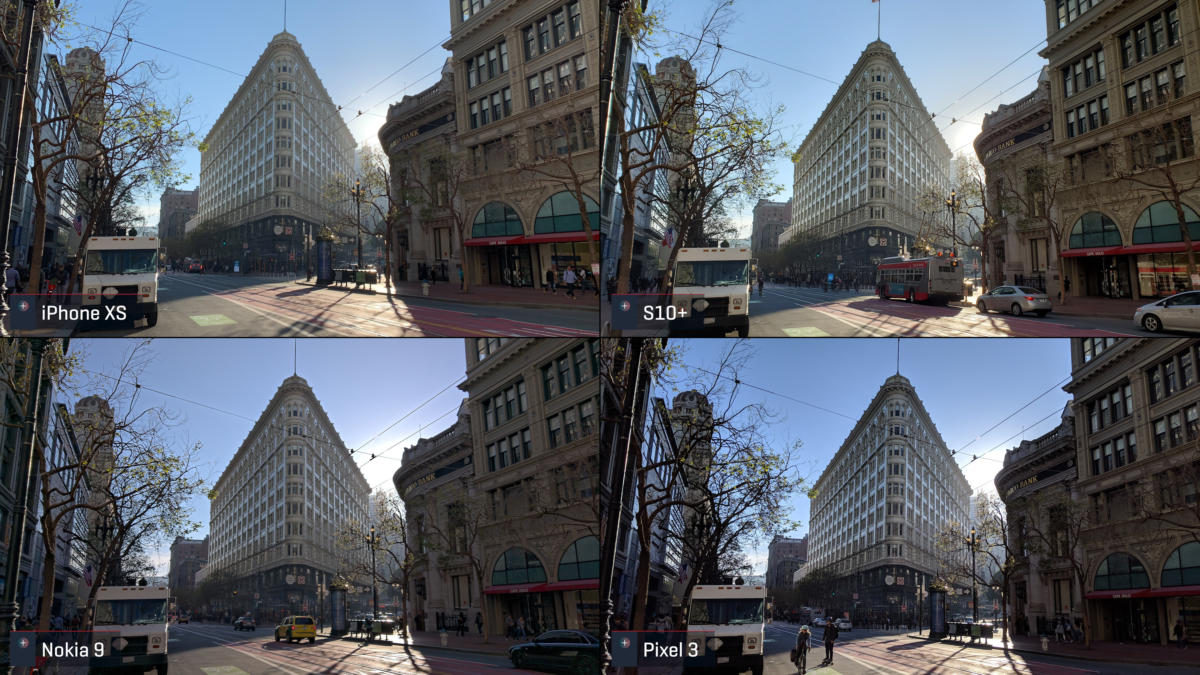
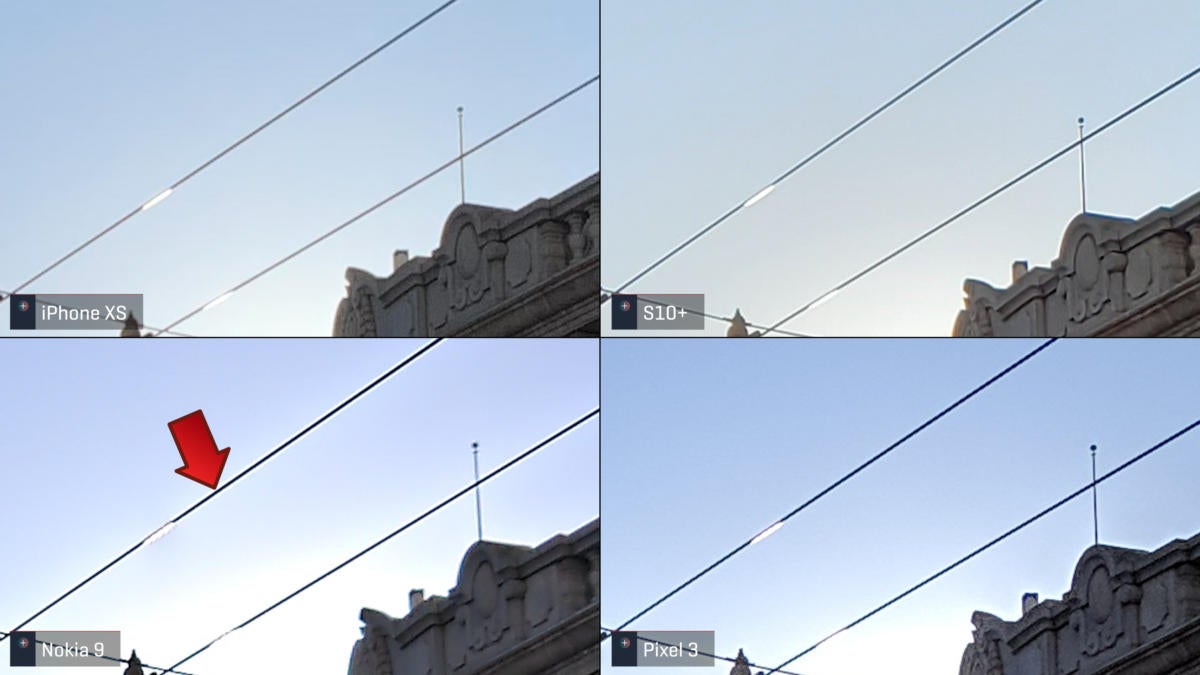
 Moving along to my favorite building in San Francisco, I do need to call attention a job in some of Nokia's shots. Zooming in on the power lines we poster haloing around these cables. But it's non just in this photo; information technology's present in others too. This haloing happens more or less edges with dominating contrast because of how sharpening works. It essentially increases the contrast of edges, causation the edge pixels to overlighten when pushed too far. Like I said, it only appears in photos that feature hard contrastive edges, so it's not a huge problem, but information technology does reveal what Nokia is doing in its software.
 Adam Patrick Murray/IDG
  Adam Patrick Murray/IDG
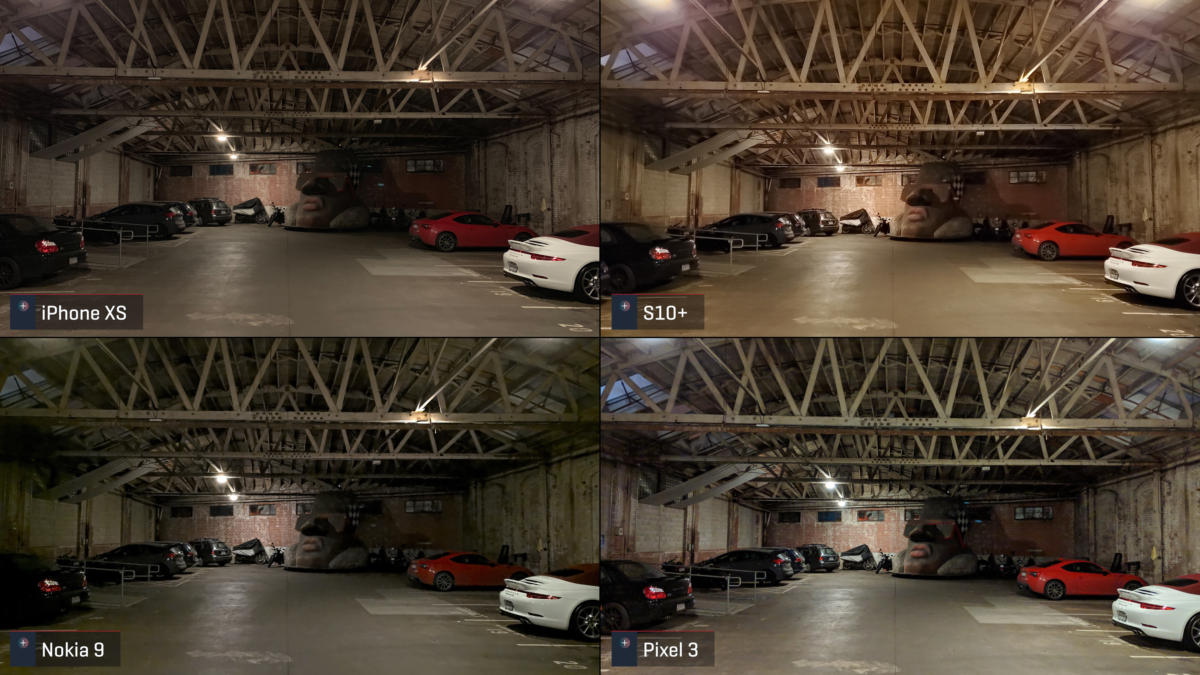
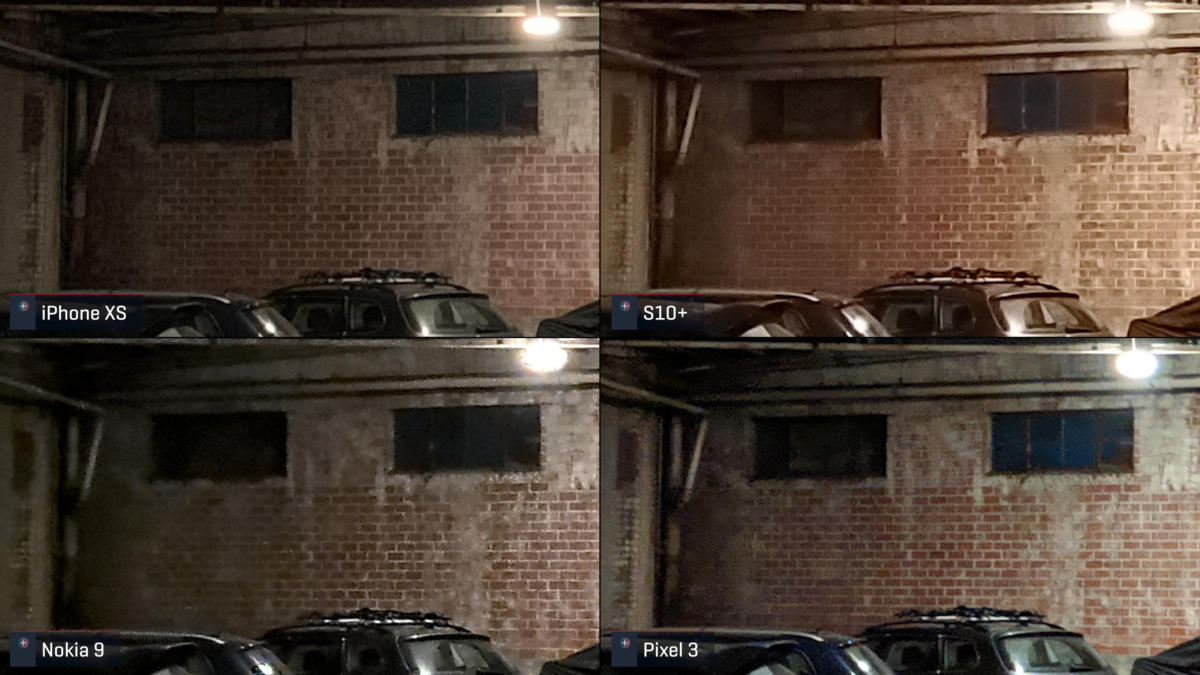
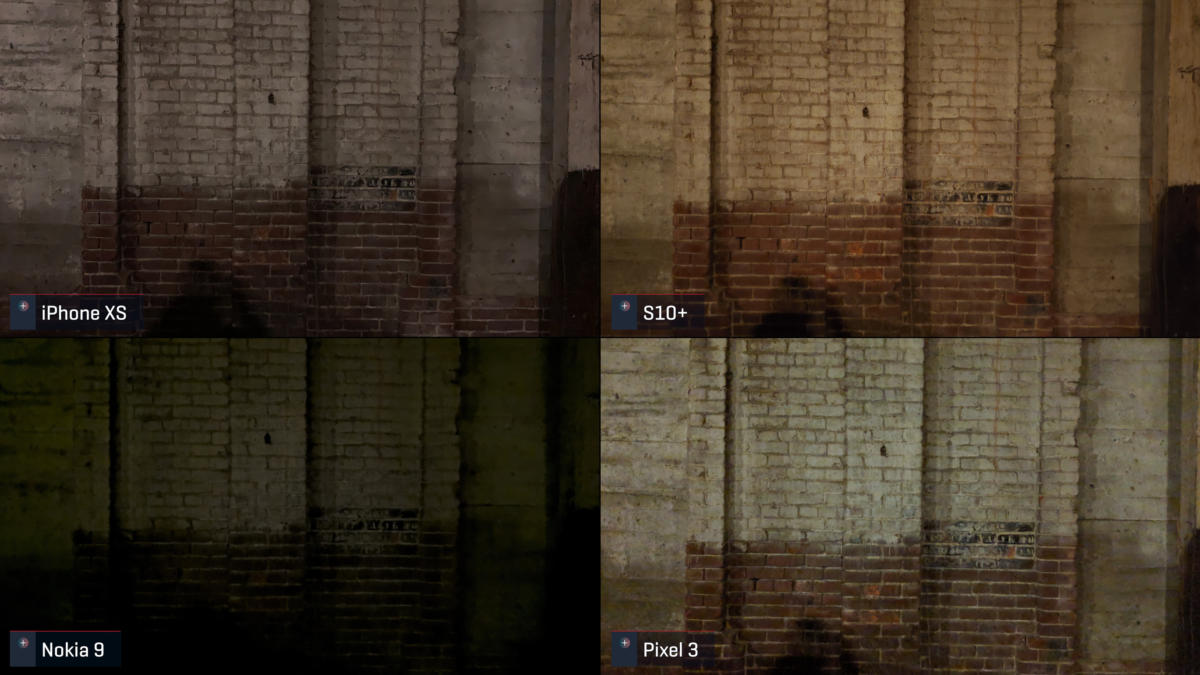
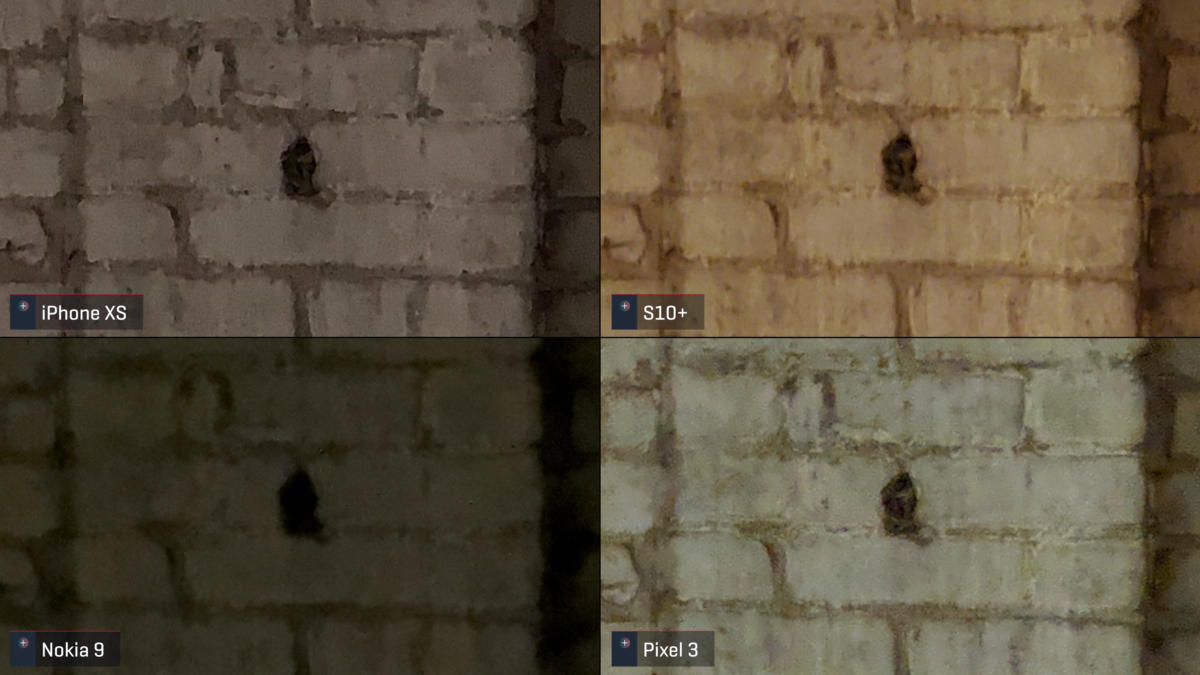
 Checking out some photos in this dark garage, we notice that the S10+ is all but the brightest of the bunch, but zooming in reveals a pretty soft visualize. There is approximately detail in the S10+'s photo leastways, Sir Thomas More then than with the Nokia, which turns in a blurred great deal. Nokia's five cameras are supposed to bring more light, but IT doesn't seem care the system knows how to keep the photo sharp. The Pixel's photo exhibits some intellectual intensity noise in the darkest parts of the image, which is a real bummer. The iPhone does the best here—especially in the corner.
 Adam Patrick Murray River/IDG
  Adam Patrick Murray/IDG
 Before I zoom on this dark photo, I'll remark that when I was standing there shooting, I couldn't even tell whether the Nokia even captured anything, as the covert was completely black. I thought I messed something up, but this is really how poorly it performed—an total waste of a jpeg register.
Zooming in reveals pretty crappy performance crossways the display board, each breaking behind in their own ways. The Pixel's stochasticity is out of control. The S10+ is supersoft and lacks definition. The iPhone holds up the best, but it's still not anything to pen home about. (If you're speculative how Nox modal value shots do here, stick roughly for the extra features category.)
 Adam Patrick Murray/IDG
  Go Patrick Murray/IDG
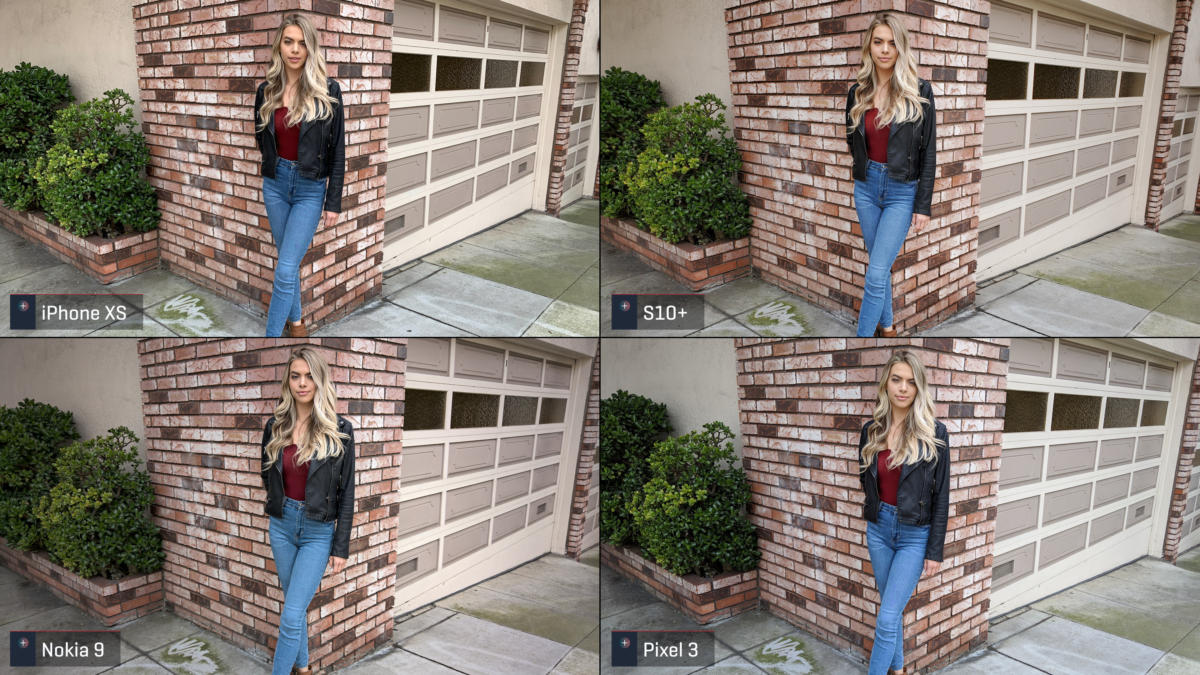
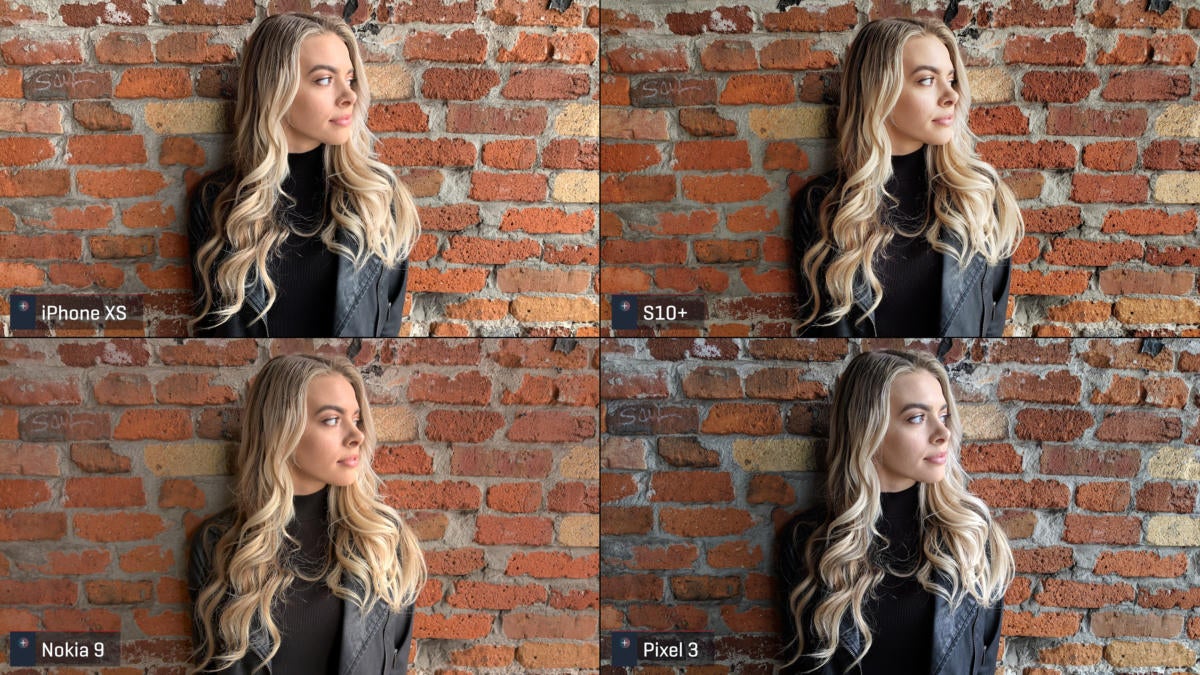
 Now let's move out onto some examples with Natalie. For this wider shot let's concentrate on the bricks likewise arsenic her face. The results are fairly similar to what we've seen thus far, espeically on the S10+, where it's smoothing over details like strands of pilus. Fortuitously the Nokia does just fine here and remains a viable pick in some cases.
 Adam Patrick Sir James Murray/IDG
  Adam Patrick Murray/IDG
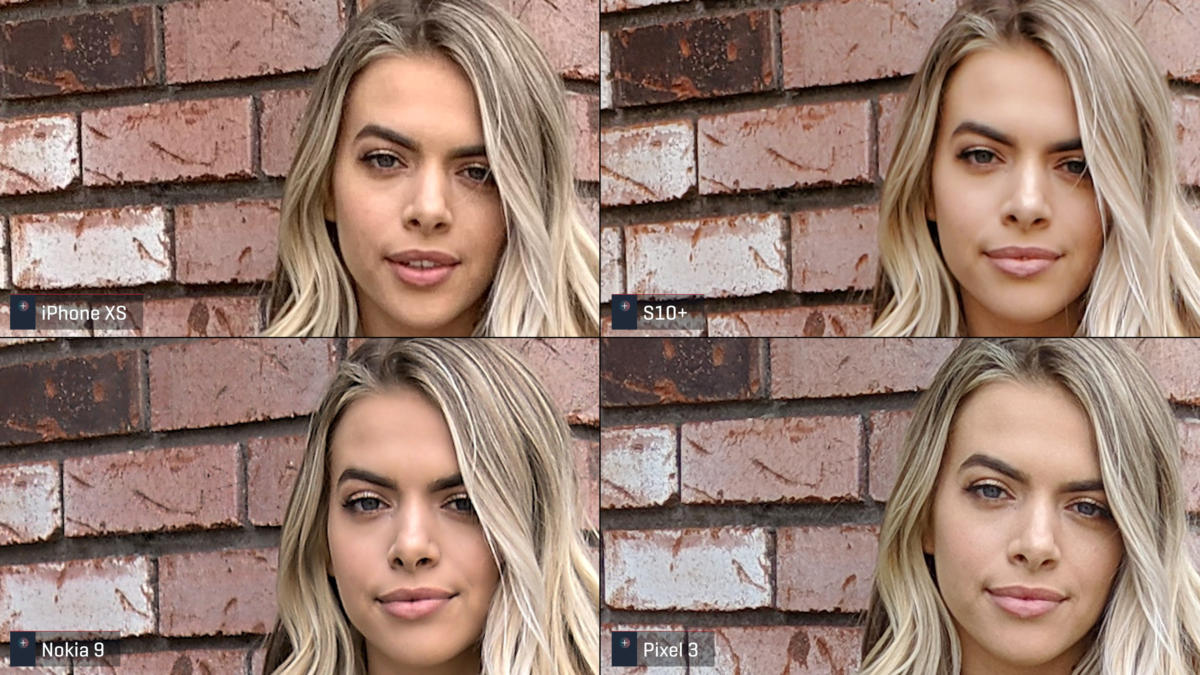
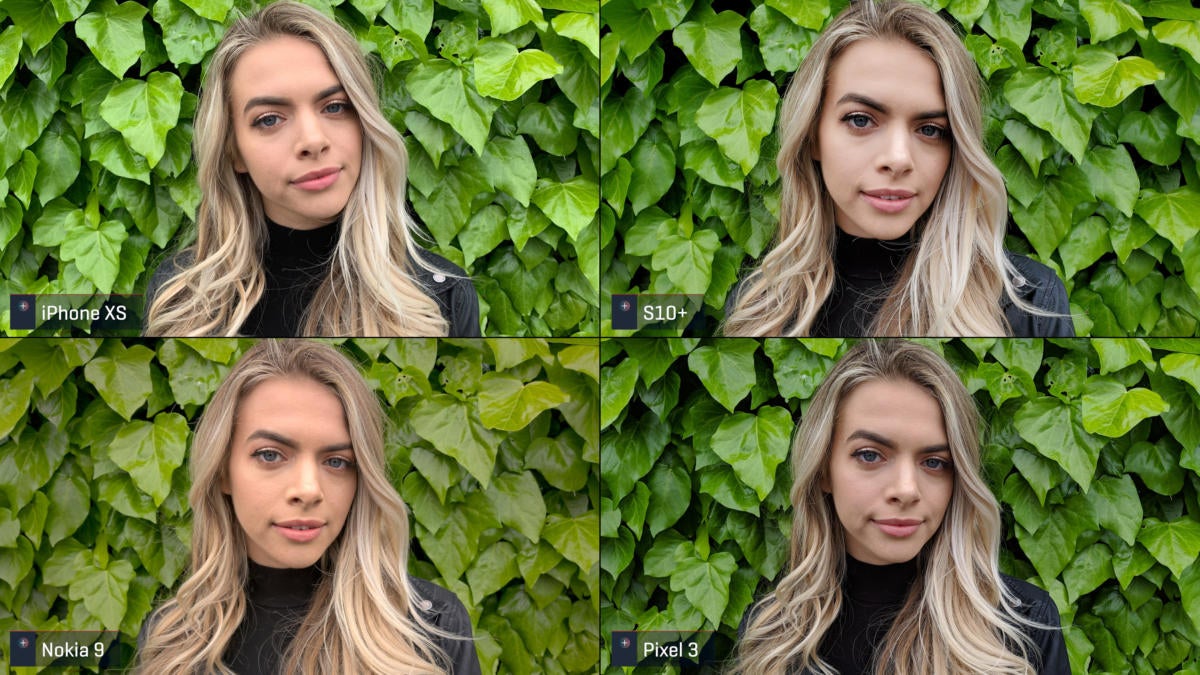
 Moving to a closer shooting, I'm a number concerned by roughly of these results. The Pixel's oversharpening isn't precise ingratiatory to bark. The Nokia's photo has the most background blur, suggesting IT's applying blur even though it wasn't in portrait mode. The S10+'s pellet is the most extreme, smoothing over her skin to the point of her looking like a doll. Its noise reduction has been heavy this altogether clock, but the amount of smoothing on her human face seems to go sometime underlying noise reduction.
 Adam Patrick Sir James Augustus Murray/IDG
  Adam St. Patrick Murray/IDG
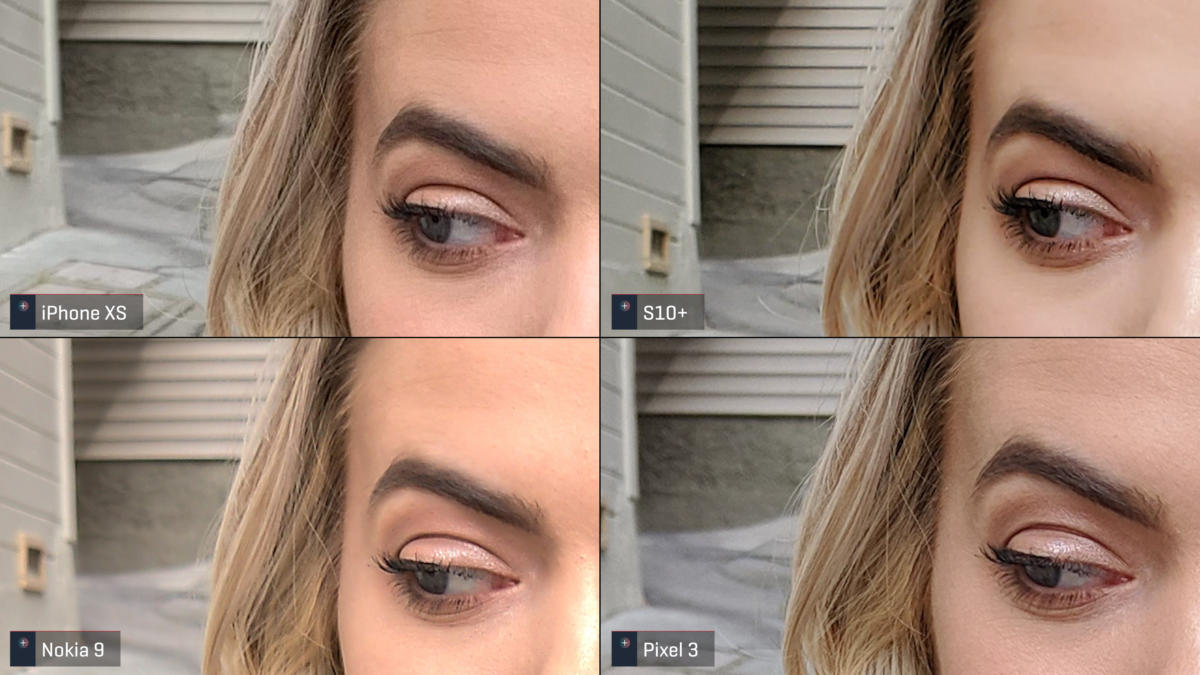
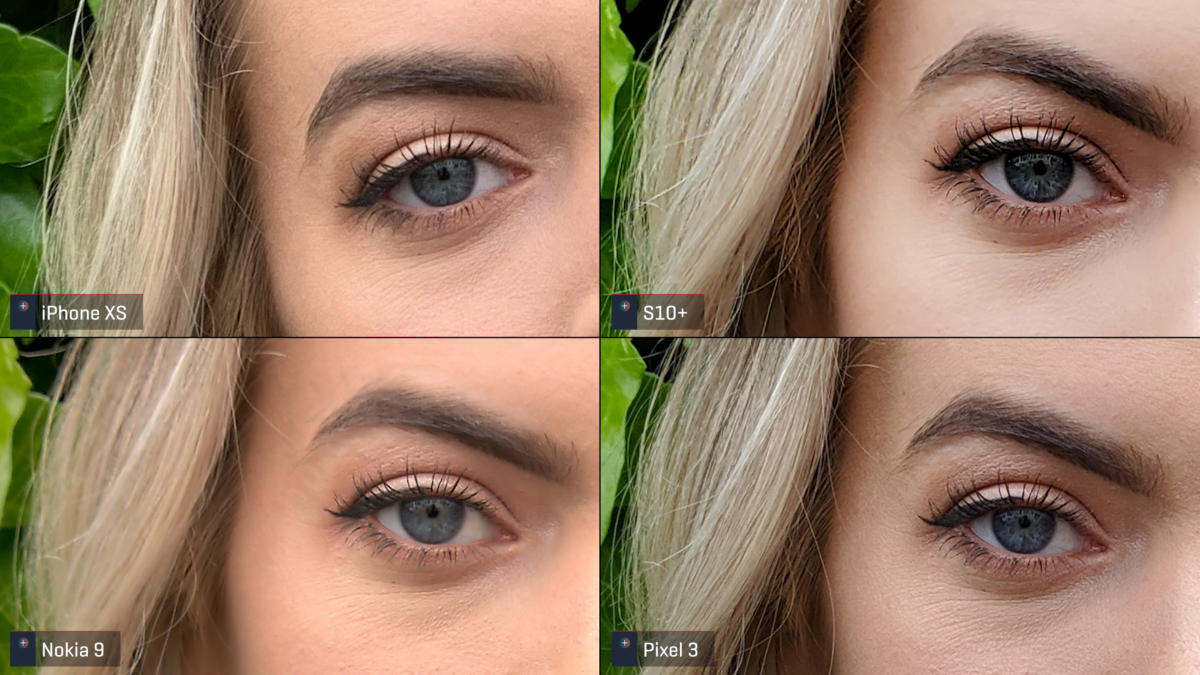
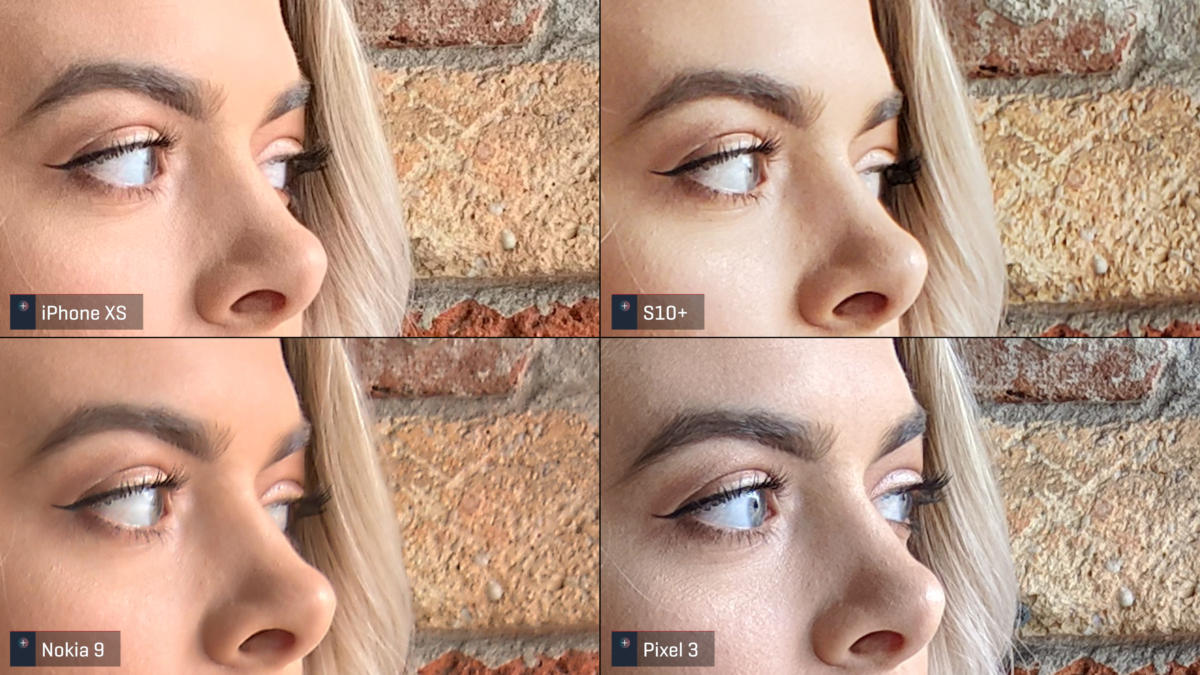
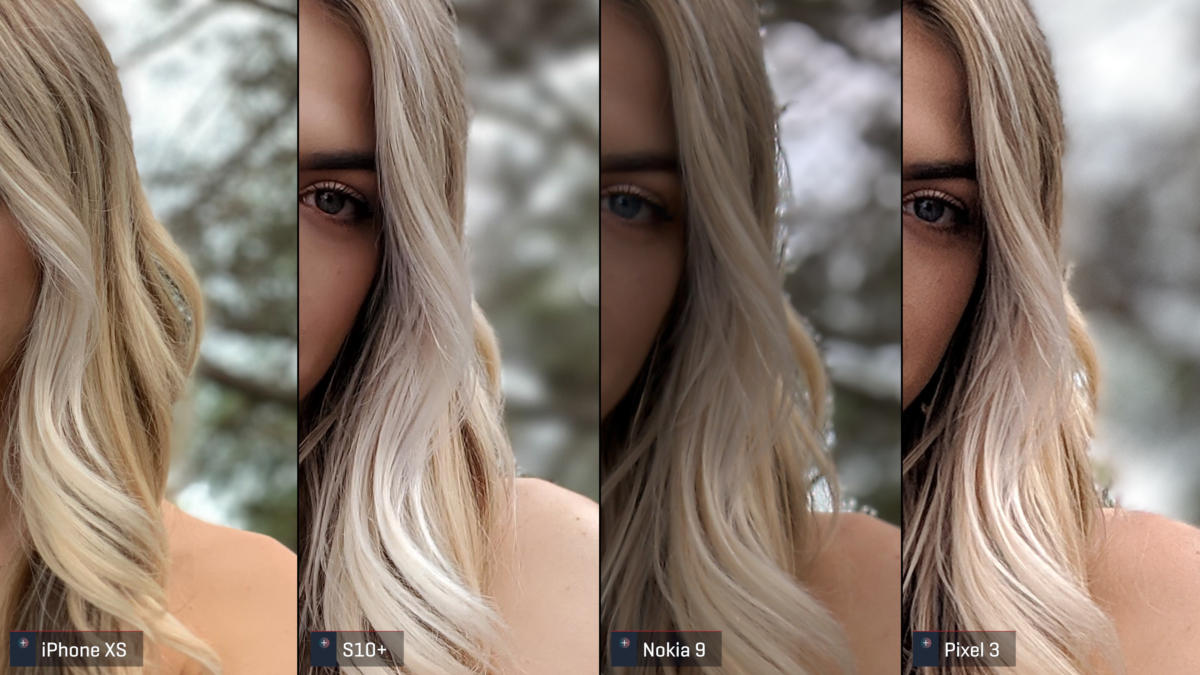
 Moving in even closer, the effect on the S10+ is obvious. The details in Natalie's sword lily and eyelashes are clearly sharpened, yet the skin on her cheek and forehead are smoothed concluded and exhibit barely any contingent. This is far too extreme in auto mode—seriously, this type of beautification should only be applied in a dedicated stunner mode.
But what about that Nokia shot? It appears to be trying to replicate a DSLR with shallow depth of field by having most of her face in focus, while blurring everything else. Once again, this isn't in Portrait modal value, this is from auto mode, and IT's going too Interahamw for me. Course the Pixel doesn't flatter Natalie's skin, and it's the iPhone that looks the best in all the shots with her in it.
 Adam Patrick Murray/IDG
  Cristal Patrick Murray/IDG
 So this family has been delimited by extremes. The S10+ applies heavy amounts of noise reduction and appears to slippy skin. Nokia is hit-or-drop, and tries to add depth to photos of masses whether you want that or not. The Pixel can be the sharpest of the crew, just uses sharpening to bewilder in that respect, which doesn't blandish skin. So it's the iPhone that's reproducible and performs fit in about every scenario. Apple's iPhone XS takes the lucidity class.
Category 3: Exposure
The third category is photograph. Hera we'll be superficial at dynamic run you bet apiece camera chooses to expose for a scene.
 Adam Patrick Murray/IDG
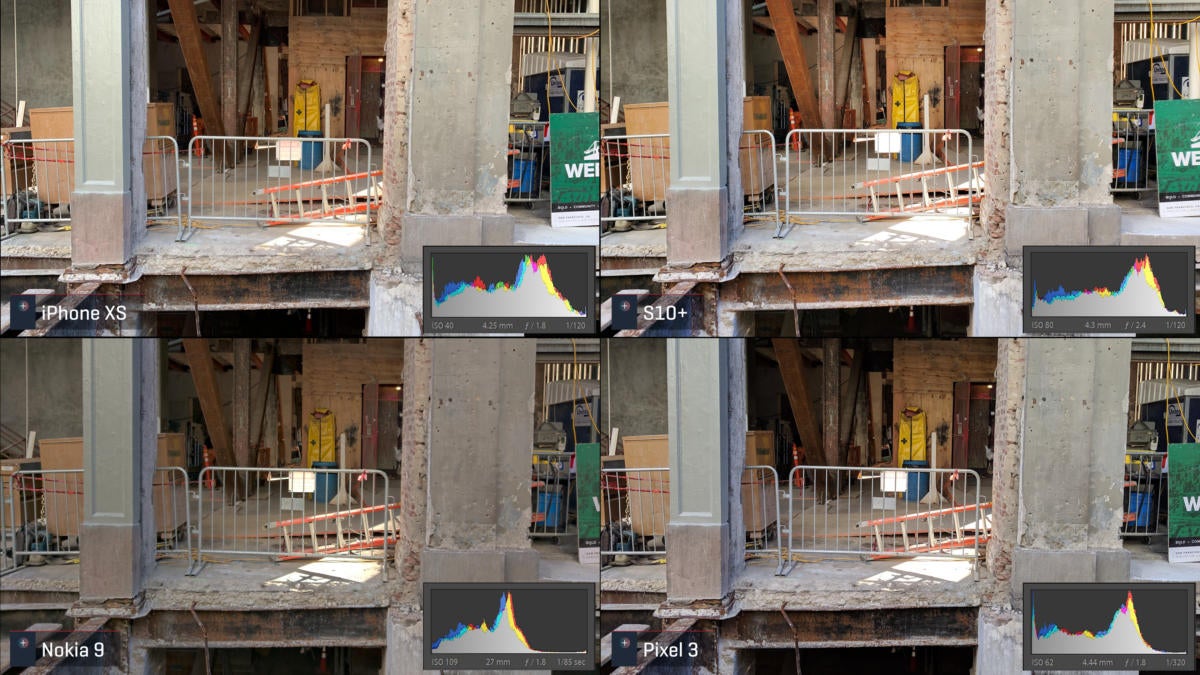
 Checking out this grammatical construction site, we notice right away that the Nokia 9 is the flattest of the bunch. IT has the most info in the shadows toward the bottom of the frame, simply it doesn't protect the highlights as well equally the iPhone does on this sign here. Overall the Nokia 9 is a bit underexposed. The S10+ is the brightest, but it completely blows away the sign.
 Robert Adam Patrick Murray/IDG
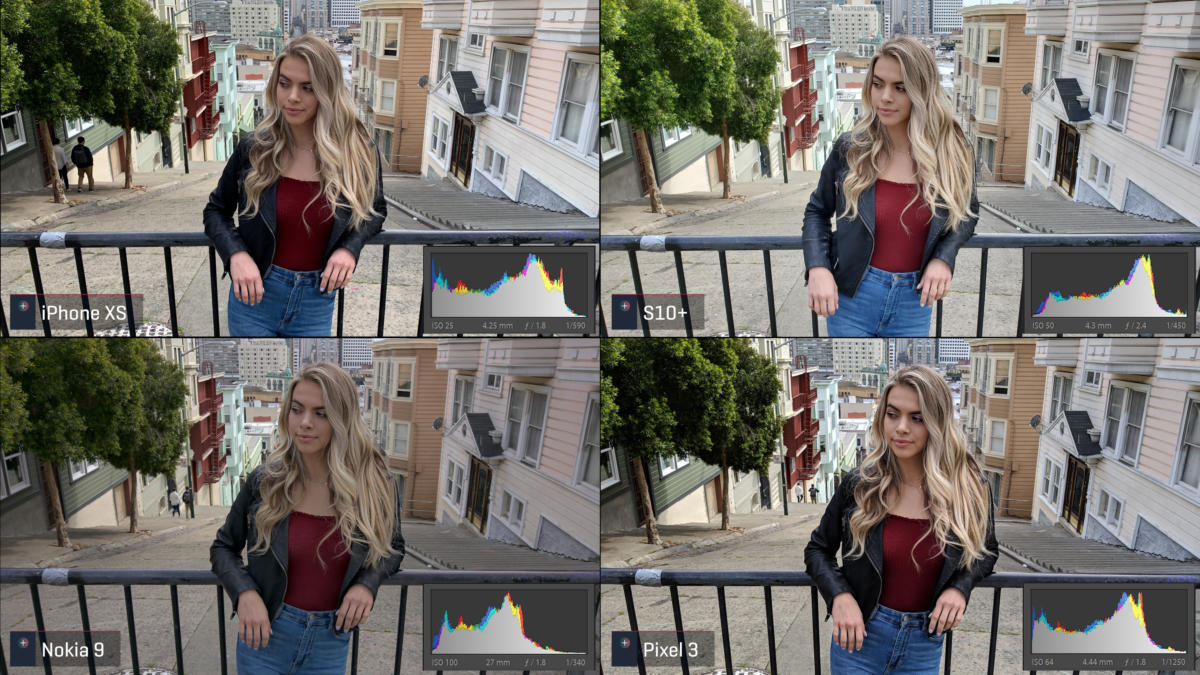
 This street scene illustrates the differences even more, with the Pixel having the most line and Nokia existence a little underexposed and flat. The iPhone and S10+ are beautiful similar, though Apple keeps those shadows pretty night. The S10+'s shot looks washed-out, but in a good way for this scenario. For illustration, both the S10+ and Nokia images allow me to pump up as untold contrast A I desire when I go to post the photos on Instagram
 Adam Patrick Murray/IDG
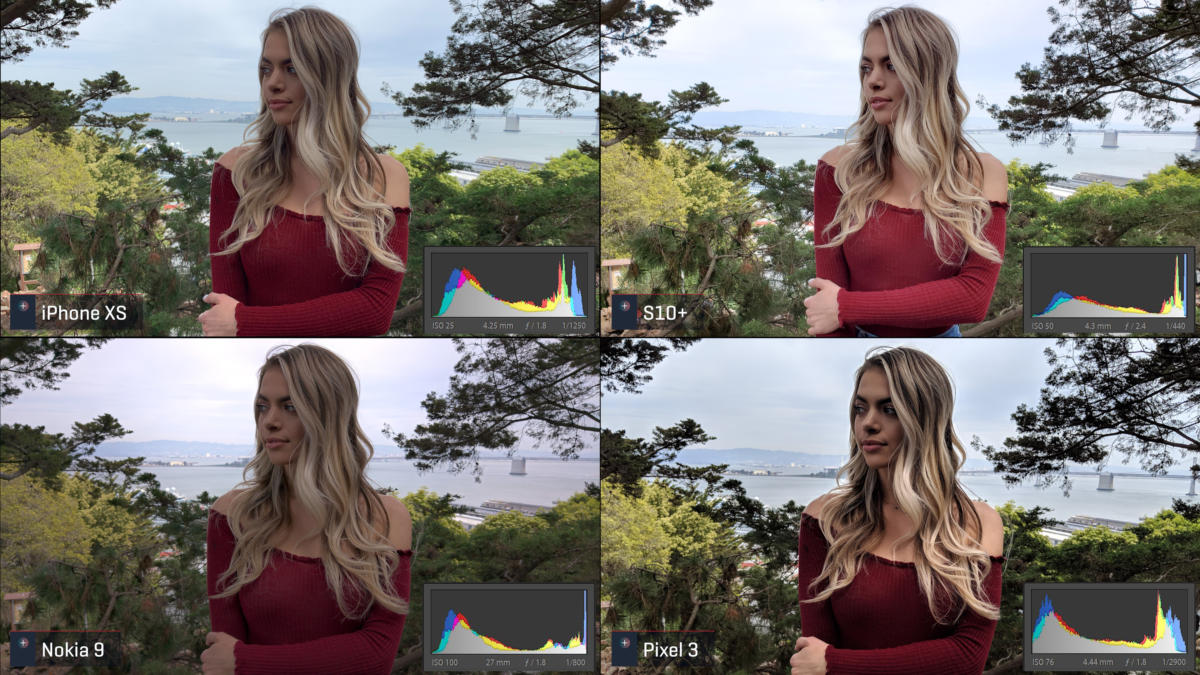
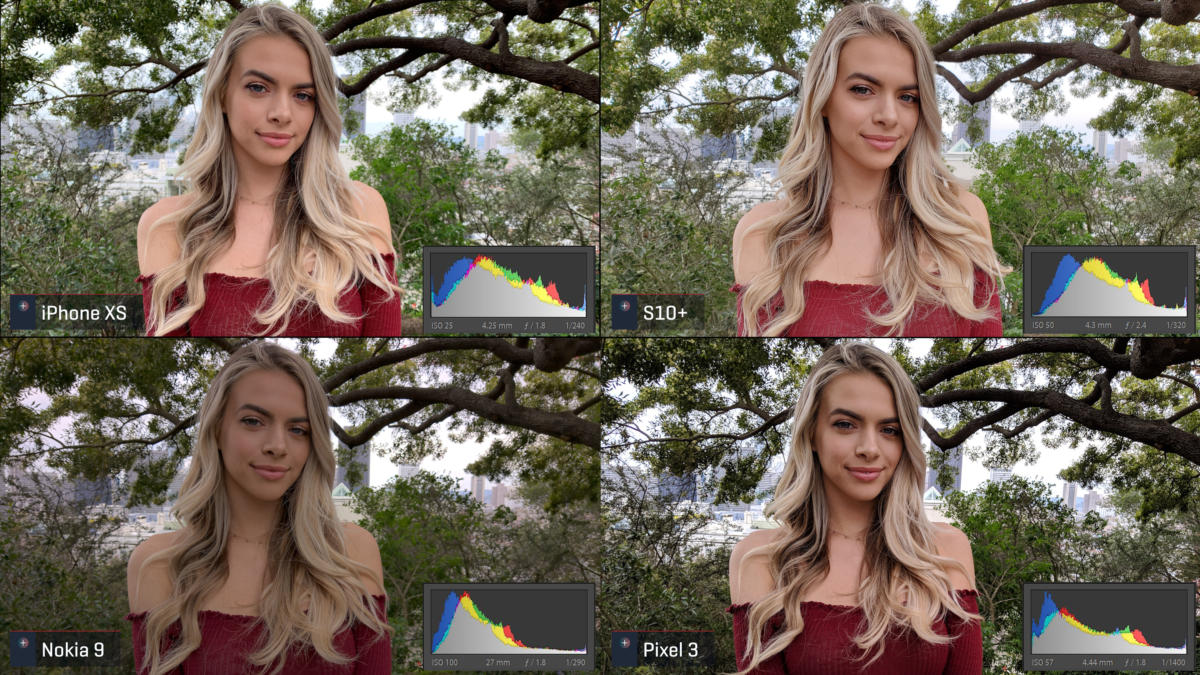
 This is where the processing of each camera is most manifest: in a high-contrast, back-well-lighted scenario. The highlights are blown tabu in the S10+ and Nokia photos, patc the Pel and iPhone keep the exposure right where it needs to be in order to retain selective information. But the Pixel's HDR is besides fast-growing and looks besides processed, a trait in Google phones that I've never loved. The iPhone does the best here: It gives me editing flexibility and a well-adjusted exposure.
 Adam Patrick Murray/IDG
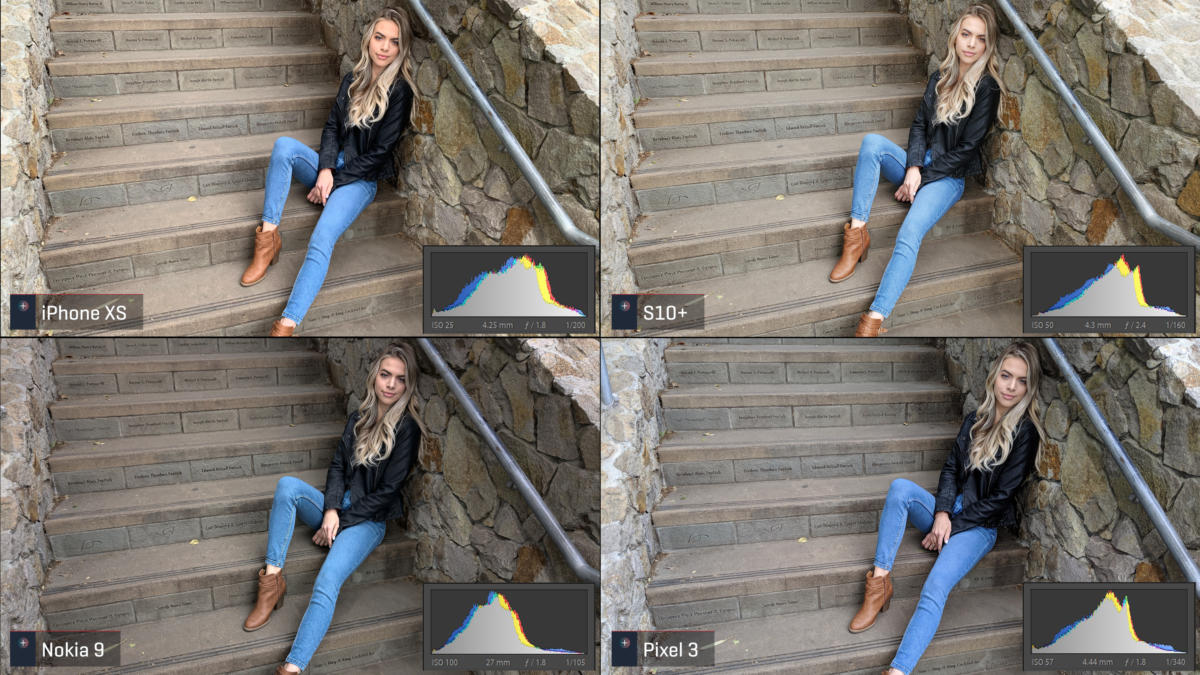
 This incoming example is alike, but to each one phone fails to retain those highlights. That's fine though, because I knew it would be a really hard scenario that forces the cameras to make a choice. Samsung seems to choose to keep Natalie by rights exposed in all of these shots, regardless of what happens to the rest of the image. Nokia tries its hardest to keep the about dynamic range, which pleases the photographer in ME, but this results in editing flattering a requisite, not a choice. Merely that iPhone photo has the best balance of dividing line and dynamic range in mind.
 Adam Patrick Murray/IDG
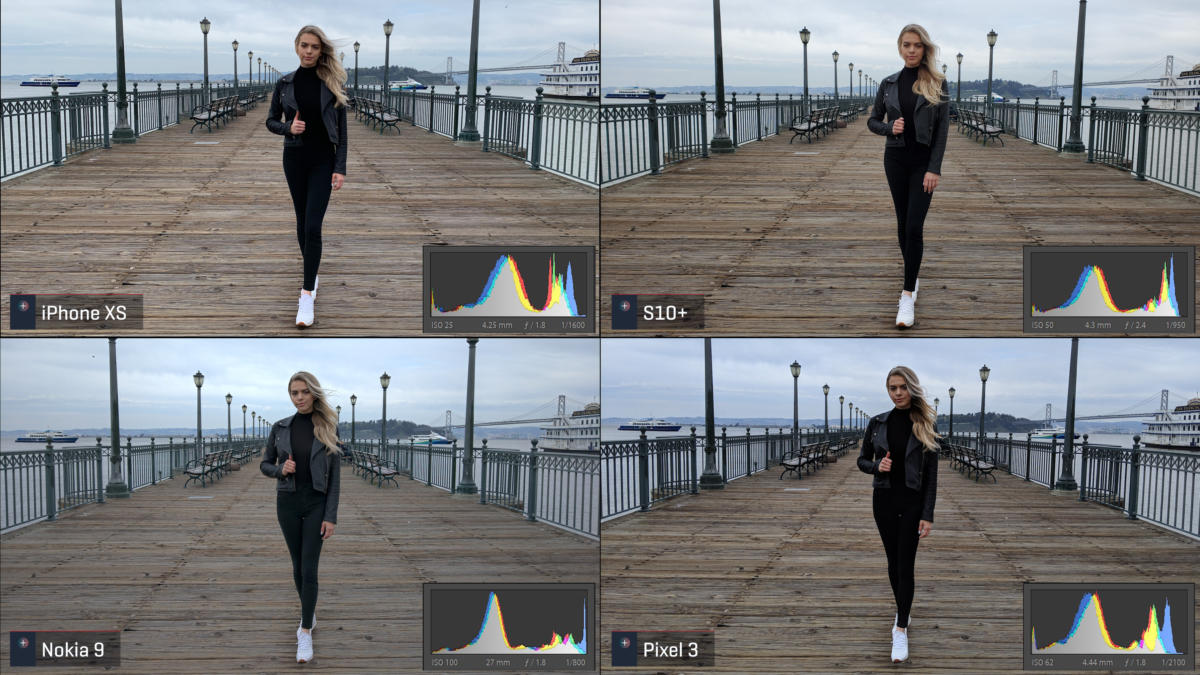
 I coif really take account what Nokia is doing here past protecting hightlights and offer a flat epitome. Out of all of these photos, Nokia's rendering is the nighest to how I would enamor this scene with a DSLR. The rest have a headphone capture quality to them, while the Nokia feels unique and business. Merely for the average user, it might be too dark.
 Adam Patrick Murray/IDG
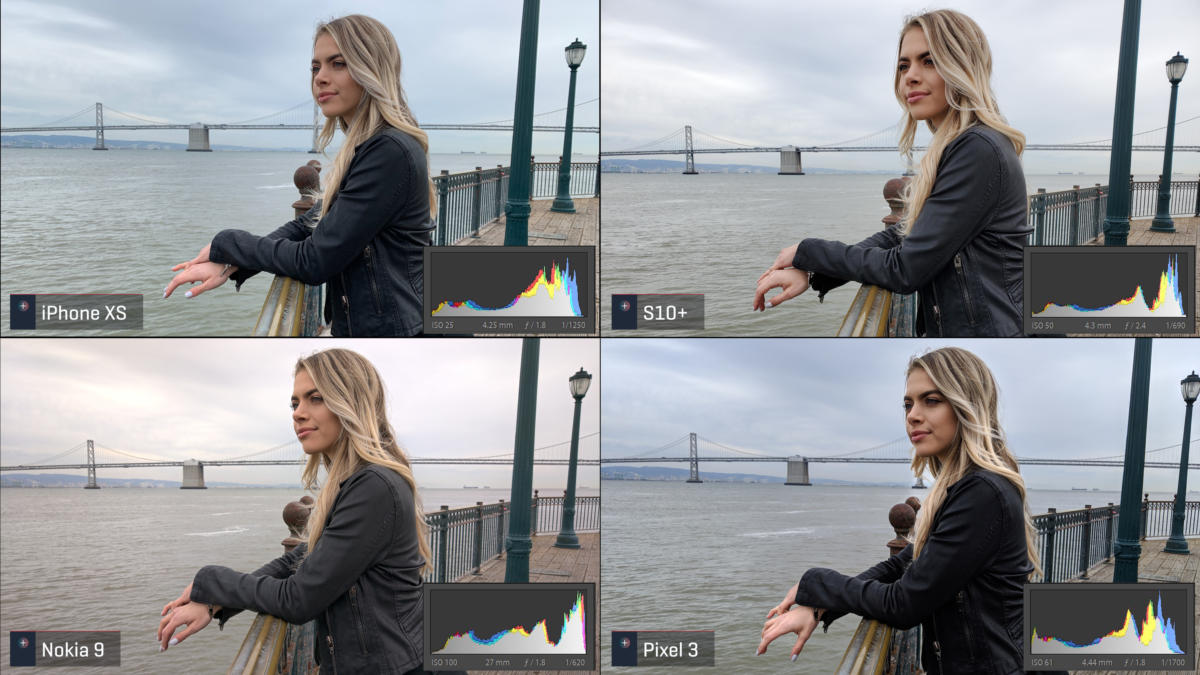
 This last example is absorbing, equally Natalie's completely-black outfit confuses Nokia into blowing verboten the sky in order to retain the shadows. I placid choose that to what happens in the Picture element's exposure, turning her into a black slab of nullity.
 Adam Patrick Sir James Augustus Murray/IDG
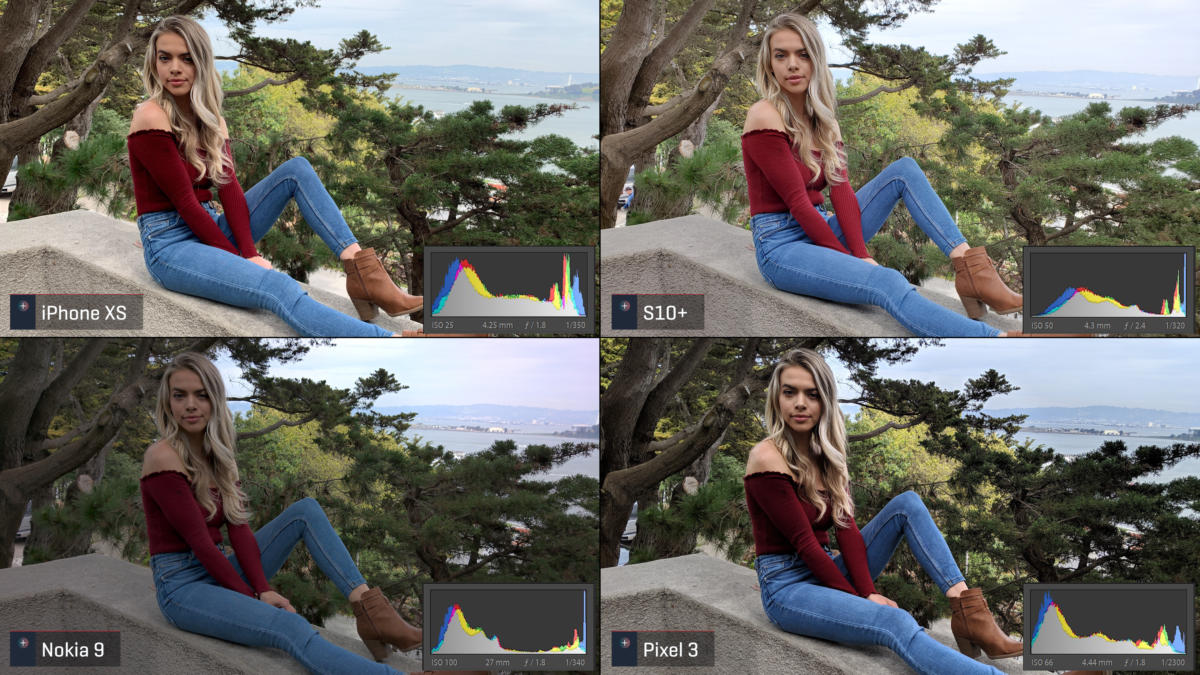
 If this category were defined as 'most dynamic rate,' the Nokia would win handily; just it's more than that. There needs to be a balance between a flat and editable photo, and one that can embody posted with minimal editing required. On top of that, the Nokia sensible tends to underexpose overly often, which makes correction a requisite. On top of that, the five-sensing element system doesn't turn in on the promise of delivery in more light, which is most likely a nonstarter of software package tuning.
 Adam Patrick James Augustus Henry Murray/IDG
 So all in complete, it's the iPhone that does the best in most scenarios, providing enough information for redaction, but a pleasing photo even without it. The S10+ isn't too far behind, but its propensity to labour photo too high results in some problems. Finally, yhe Pixel's results are still too highly processed for my gustatory modality. Malus pumila's iPhone XS wins the exposure category as recovered.
The fourth and concluding family looks at additive features. Here we'll go over some of the trademark features that set each phone apart.
I'm going to fishing gear this category a bit differently this time, and herald the winner up front and explain why. When I laid out all four phones in frontal of Maine and honestly asked myself which one I prefered to use and has the most features, information technology was the S10+.
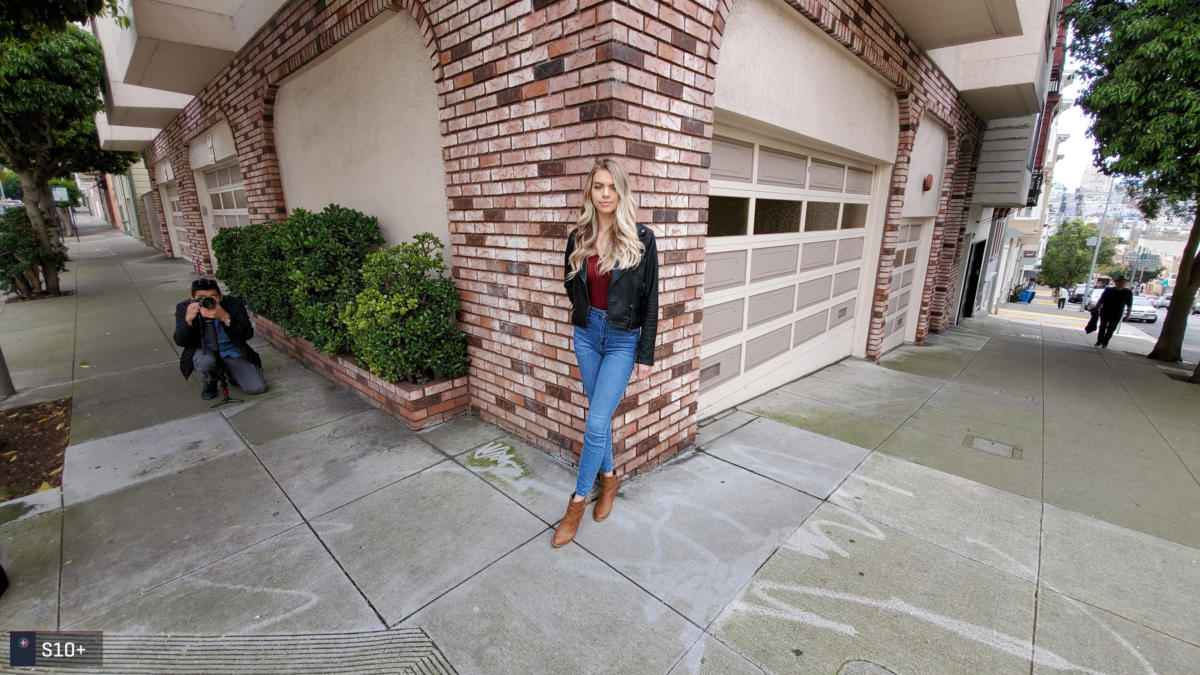
When talking about lenses, sure, the Nokia 9 has five of them, but only one impelling field of view. Meanwhile, the S10+ has three cameras dedicated to trine different W. C. Fields of view—the only one in this conflict to do so.
By this stage, fans of Finale Cam Standing will jazz that I'm a huge fan of open-tilt lenses, and the ace featured connected the S10+ is great. The 123-degree field of sight is broad enough to fascinate very large scenes with minimal distortion, and it's f/2.2 lens is big enough to Lashkar-e-Tayyiba in plenty of light.
 Hug dru Patrick Murray/IDG
  Adam Patrick Murray/IDG
  Adam Saint Patrick Murray/IDG
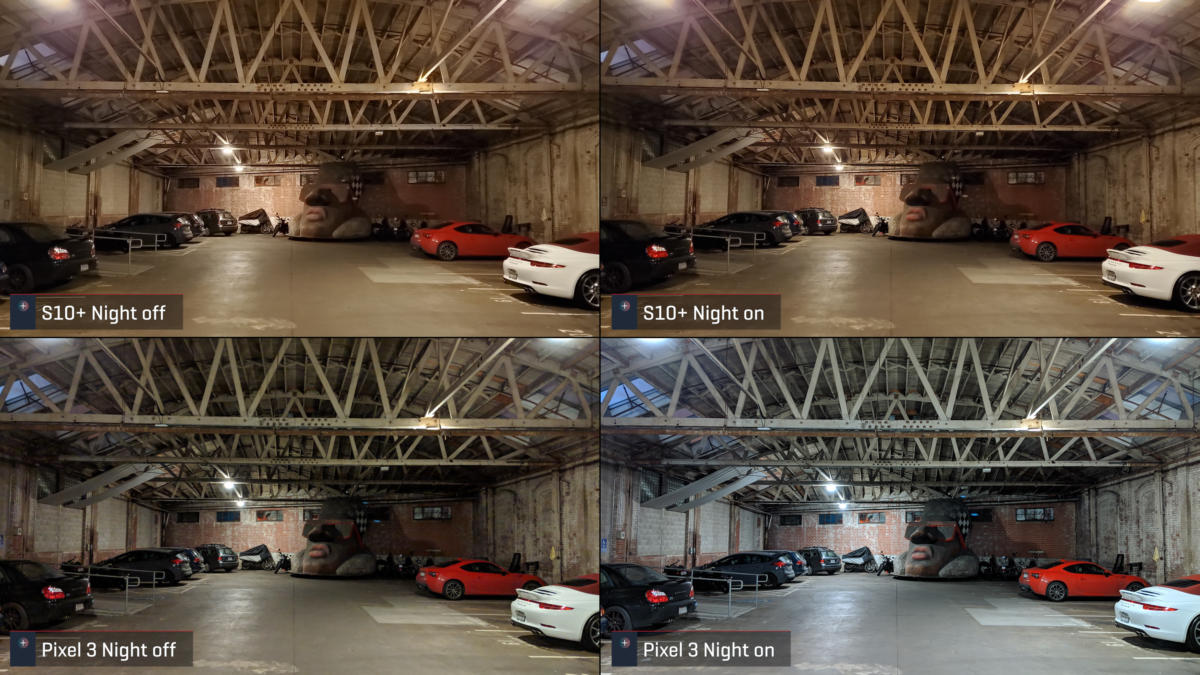
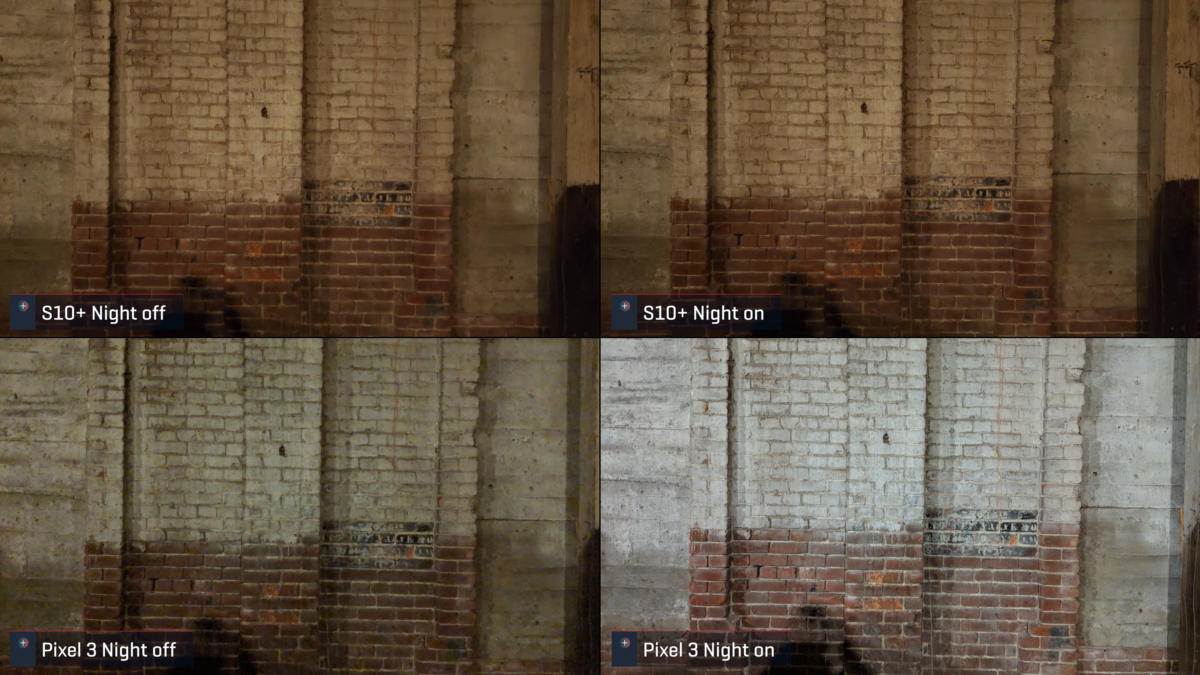
 Speech production of light, Samsung's Night Mode scarcely wasn't as useful A the one found on the Pixel and never produced a widely fitter trope over the standardised shot. Luckily the S10+ is no slouch in the degraded light department even without Night Mode, so IT's not a huge knock. Peradventur Samsung could dress more in future computer software tuning.
 Go Patrick James Augustus Murray/IDG
  Adam Saint Patrick Murray/IDG
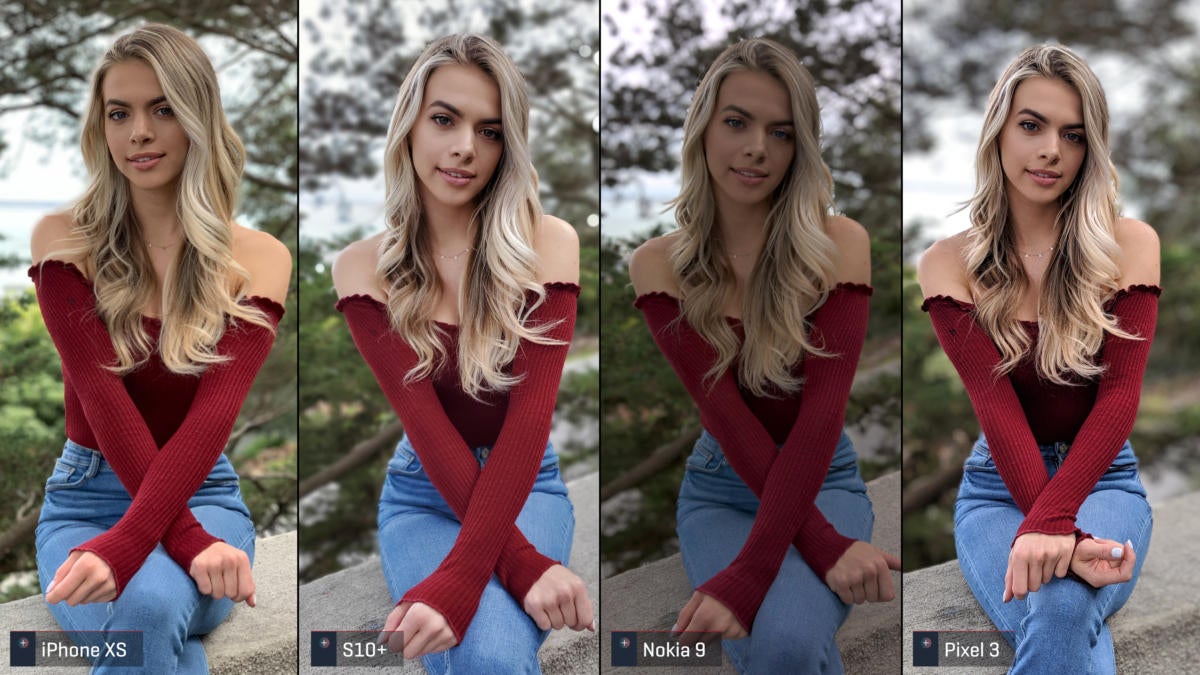
 Even though Night Fashion wasn't that impressive, I was impressed by Live Focus—Samsung's version of portrait mode. Out of all quaternion phones, the S10+ delivered the good edge detection, regular major than what Nokia offers with its unique five-camera setup. Samsung's extra options, like Spin and Color Point, are way more amusive than Apple's Portrait lighting. I also appreciate that modes are available for the main wider lense, and not just now constricted to the zoom lens. It offers more creative possibilities and ensures the best quality possible.
 Go Patrick Murray/IDG
  Adam Patrick Murray/IDG
  Adam Patrick Murray/IDG
  Adam St. Patrick Murray/IDG
 All all told, Samsung's photographic camera app is easily the virtually chesty and feature-rich. You fire choose to hide unused camera modes, save RAW files when shooting in In favor of mode, and export directly to Instagram if you want to. Add in the speed and dependableness of the app itself, and information technology's hard to find some fault.
I will say that the Scene Optimizer is nowhere near As influential and useful every bit something like Huawei's Master AI, and I will never use Bixby Vision, so it's clean taking up quad on the screen. But those downsides are very minor gripes and get into't make an impact happening how I used the app daily.
Non that the other phones don't have great things going on for them, I just can't say any of them are as trusty or feature-rich as what's going on in the S10+. So yeah, Samsung's Galax S10+ wins the extra features category.
Winner
With that, it's time to crown a winner of this epic cope with-up! First, I do want to give a special award to the Nokia 9 Pureview. While I derriere't recommend buying into this photographic camera system, IT does have flashes of brilliance and shows a promising proximo for multi-lens systems—especially for camera lovers. But if we're talking about the best of the best available now, look no advance than Apple's iPhone XS!
This marks Apple's maiden hindmost-to-back win, and the longest run it's held in Last Cam Standing. The XS Simon Marks a very important turning point for Apple, and it's thanks mainly to computational photography. The photos that come out of this camera are systematically sharp, feature raft of dynamic range to play with, and looking at great even with marginal redaction. Malus pumila is at the top of its photography gamey right now, and is worthy of the crown.
Just there leave always be new and exciting Android phones to come out, corresponding Huawei's P30 Pro. Sign away and tune in next time for more camera testing connected Last Cam Standing.
 Adam Patrick Murray/IDG
  XTC St. Patrick Murray/IDG
  Robert Adam Patrick Murray/IDG
  Adam Patrick James Augustus Murray/IDG
  Adam Patrick Murray/IDG
 Take down: When you purchase something after clicking links in our articles, we may earn a small-scale commission. Read our affiliate link up policy for more inside information.
Cristal Patrick Murray is a cinematographer/photographer keep in Oakland, California. www.adampatrickmurray.com

Source: https://www.pcworld.com/article/403620/samsung-galaxy-s10-camera-test-vs-iphone-xs-pixel-3-and-nokia-9.html
Posted by: ferreiradefe1977.blogspot.com
0 Response to "Samsung Galaxy S10+ camera test vs iPhone XS, Pixel 3, and Nokia 9 - ferreiradefe1977"
Post a Comment